

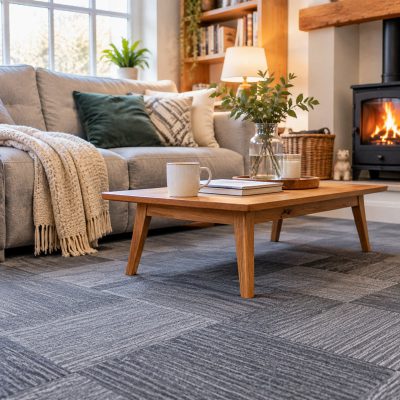
As the British winter sets in, we tend to look for ways to make our homes feel warmer and more comfortable. Thicker blankets, softer furnishings and a little extra heating all help, but there is another part of the home worth considering: the floor.
Wooden flooring, laminate and ceramic tiles can feel particularly cold underfoot during the winter months. If you are already thinking about refreshing a room, replacing the entire floor might seem like a big commitment. It can be expensive, disruptive and more work than necessary.
Carpet tiles offer a more flexible alternative. They provide a softer surface, come in a variety of colours and styles, and can help give an existing room a fresh look without necessarily requiring a complete flooring replacement.
1. Make Your Home Feel Warmer and Cosier This Winter
When temperatures drop, the feel of your flooring becomes more noticeable. Stepping onto a cold tiled floor first thing in the morning is hardly pleasant, while spending time in a living room with a softer surface underfoot can make the space feel more inviting.
Carpet tiles are worth considering in rooms where comfort matters, such as bedrooms, living areas and home offices. Their textile surface feels softer than most hard flooring, helping create a cosier atmosphere during the colder months.
They can also change the appearance of a room without requiring much else to be updated. A neutral carpet floor, for example, can soften the look of a bedroom with wooden furniture, while a darker shade may suit a busy home office.
It is worth keeping expectations realistic. Carpet tiles will not heat a room or replace proper insulation, but they can make cold floors feel more comfortable underfoot.
2. Why Carpet Tiles Are a Practical Choice
Traditional fitted carpet remains a popular flooring option, but carpet tiles have a few advantages that make them particularly useful for smaller home improvement projects.
Easier to Handle and Fit
Carpet rolls can be awkward to move, cut and position, especially in smaller rooms or spaces with unusual layouts.
Individual carpet tiles are generally easier to handle. You can bring them into the room in smaller batches, arrange them before installation and adjust the layout as needed. This makes them a manageable option for many DIY projects.
Replace Individual Tiles When Needed
One of the biggest advantages is the ability to replace individual sections when necessary.
Imagine spilling a drink in one area of the living room or finding that a section has become worn after years of use. With traditional fitted carpet, repairing localised damage can be difficult. With compatible carpet tiles, you may only need to replace the affected pieces.
It is a good idea to keep a few spare tiles after installation. Having replacements from the original batch can help avoid slight differences in colour or appearance later on.
More Flexibility With Colours and Layouts
Carpet tiles are available in different colours and patterns, allowing you to create a floor that suits your home.
You could use one shade throughout the room for a simple finish, or combine complementary colours to create a subtle pattern. Some layouts can also help define different areas within a larger space.
Before fixing the tiles in place, try arranging them on the floor first. It is much easier to experiment with different combinations before installation begins.
3. Refresh Your Floor Without Replacing Everything
If your existing flooring is still in reasonable condition, you may be able to update its appearance without removing the entire surface. However, whether carpet tiles can be installed over it depends on the type and condition of the existing floor, as well as the installation requirements of the tiles.
Check the Existing Surface
Start by moving the furniture and inspecting the floor. Look for loose sections, raised edges, cracks, uneven areas or signs of damp.
The surface needs to be stable, clean, dry and sufficiently level. Covering an existing problem with carpet tiles will not fix it and may affect how well the new flooring sits.
Some surfaces may need additional preparation. For example, deep grout lines between ceramic tiles can affect the finished result, while certain vinyl floors may not be suitable for direct installation.
Always check the manufacturer’s instructions to confirm which surfaces are suitable. If there is an underlying moisture problem, deal with it before installing any new flooring.
Measure the Room Accurately
Getting the measurements right helps avoid ordering too few tiles or buying more than you need.
For a rectangular room, measure the length and width with a tape measure and multiply the two figures.
For example:
- Room length: 4 metres
- Room width: 3 metres
- Total floor area: 12 square metres
If the room has an alcove or an irregular shape, divide it into smaller rectangles, calculate each area and add the figures together.
Allow some extra material for cutting, mistakes and future replacements. Around 5–10% extra is a useful starting point for a straightforward room, although more may be needed if there are several corners, doorways or awkward sections.
Check how much floor area each pack covers before ordering, as pack quantities vary between products.
Plan the Layout Before Installation
Before laying the first tile, work out where the rows will start and how the tiles will meet the walls.
A chalk line, tape measure and straight edge can help you mark reference lines across the floor. This is particularly useful in larger rooms, where small alignment errors can become more noticeable as you work across the space.
It is also worth dry-laying a few rows first. This lets you see where the edge cuts will fall and avoid ending up with very narrow strips around the walls.
Check the direction of the tiles too. Some products have a directional pile or arrows on the backing showing how they should be laid. Follow the manufacturer’s guidance to achieve the intended finish.
4. Choosing Carpet Tiles to Suit Your Home
The right carpet tiles should suit both the appearance of the room and the way it is used. Colour is important, but durability and maintenance deserve just as much attention.
Choose Colours That Work With Your Interior
Neutral shades such as beige, warm grey and brown are easy to combine with many existing interiors. They can work particularly well with wooden furniture, soft furnishings and natural colour schemes.
Lighter colours can make a smaller room feel more open, although they may show dirt more easily in busy areas. Darker shades can be practical where there is regular foot traffic, but consider how they will look alongside the rest of the room.
If you are unsure, check samples in the actual space before making a decision. Carpet colours can look quite different under natural daylight and artificial lighting, especially during the darker winter months.
Consider How Much Wear the Floor Will Get
A spare bedroom used occasionally has different requirements from a home office or living room that sees daily use.
For busier areas, look for carpet tiles designed to withstand regular foot traffic. In a quieter room, appearance and comfort may be more important.
Households with pets or young children may also want to consider how easily the flooring can be cleaned. The ability to replace individual tiles can be useful if a particular section becomes stained or damaged.
Carpet tiles are not automatically suitable for every room, though. Areas exposed to frequent moisture or standing water need a different type of flooring. Check the product specifications before choosing tiles for kitchens, bathrooms or entrances where wet footwear is common.
5. What You Need to Know Before Installing Carpet Tiles
Many carpet tile projects are manageable as DIY jobs, provided the floor is properly prepared and the installation instructions are followed.
For a typical room, you will usually need:
- A tape measure and pencil for marking dimensions.
- A straight edge or metal ruler for accurate cuts.
- A sharp utility knife and suitable cutting mat.
- The adhesive or fixing system specified for the tiles.
Before getting started, check a few important details.
Prepare the floor. Remove dust, dirt, grease and loose material. The surface must be clean, dry and level enough for the tiles to sit properly.
Check the installation method. Some carpet tiles have peel-and-stick backing, while others require a separate adhesive or fixing system. Use only the method recommended for the particular product and existing floor.
Allow for acclimatisation if required. Certain products need time to adjust to the room’s temperature before installation. Follow the manufacturer’s instructions rather than assuming they can be fitted straight out of the packaging.
Take care when cutting. Door frames, corners and radiator pipes can require extra attention. Measure carefully, use a sharp blade and cut on a suitable surface to keep the edges neat.
Keep spare tiles. Store a few unused tiles somewhere dry and safe. They may come in handy if you need to replace a damaged section in the future.
Taking time to prepare the surface and plan the first few rows will usually make the rest of the job much easier.
Give Your Home a Fresh Feel This Winter
You do not always need a major renovation to make your home more comfortable. Updating the flooring can be a relatively simple way to give a room a softer feel and a fresh appearance.
Carpet tiles offer flexibility in both installation and design, with the added convenience of being able to replace individual sections when necessary. The key is to choose a suitable product for the room and prepare the existing floor properly.
Home Pet Essentials stocks a range of carpet tiles for homeowners looking to refresh their flooring. Explore the available options and find a style that works with your home this winter.