

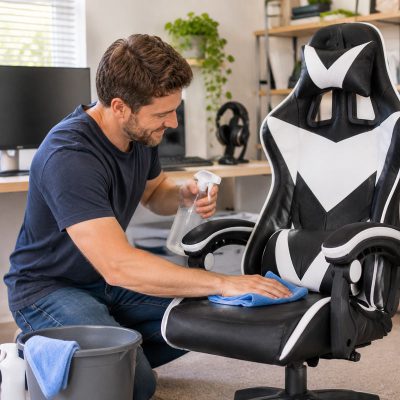
Have you ever experienced a gaming chair that starts shedding little bits of material every time you sit down? I’m going through exactly that at the moment. There’s always another pile of tiny black flakes on the floor, no matter how often I vacuum, and the chair itself is looking increasingly worn.
It’s one of those problems that’s easy to ignore at first. You might notice a small crack on the seat or a little peeling around the armrests, but before long, the damage starts spreading. Eventually, the chair looks rather tired, even though the frame and cushioning are still perfectly usable.
If this sounds familiar, you’re certainly not alone. PU leather peeling is a fairly common issue with gaming chairs, particularly after they’ve been used regularly for a few years.
Unfortunately, PU leather doesn’t last forever. As time passes, the material gradually loses its flexibility and the surface coating can start to crack and flake away. That’s a normal part of its ageing process, but how quickly it happens depends on several factors. The good news is that a few sensible habits can help slow it down.
Why Does PU Leather Start Peeling?
Before looking at ways to prevent it, it’s worth understanding what PU leather actually is and why its surface eventually starts to break down.
PU leather, also known as polyurethane leather, is a synthetic material designed to resemble genuine leather. It typically consists of a fabric backing covered with a layer of polyurethane, which gives it its leather-like appearance and texture.
This construction makes PU leather relatively affordable, flexible and easy to clean. It’s also one reason why it’s widely used in gaming chairs and other upholstered furniture.
However, the surface coating doesn’t remain in perfect condition indefinitely.
Over time, repeated bending, friction and exposure to moisture can gradually weaken the polyurethane layer. As the coating loses its flexibility, small cracks begin to appear. Once it starts separating from the backing material, it can peel away in flakes or larger patches.
This is why a gaming chair can look perfectly fine for quite a while before suddenly appearing to deteriorate quite quickly. The damage may have been developing beneath the surface before becoming visible.
What Causes PU Leather to Crack and Peel?
There isn’t usually one single reason why a PU leather gaming chair starts peeling. More often, it’s a combination of everyday wear, environmental conditions and the natural ageing of the material.
1. Everyday Wear and Friction
Think about how often you move around in your gaming chair. You sit down, shift your weight, lean back, adjust your position and get up again. Over months and years, all that movement puts repeated stress on the upholstery.
The seat is particularly vulnerable because it carries most of your weight. Armrests are another common problem area, as your arms and elbows constantly come into contact with the same sections of material.
Eventually, the surface coating becomes worn and less flexible. Small cracks develop, and continued friction makes the damage worse.
2. Sweat and Body Oils
This is one of the less obvious factors behind PU leather deterioration.
During a long gaming session, particularly in warmer weather, your body produces sweat. Your back, thighs and arms remain in regular contact with the chair, allowing moisture and natural skin oils to accumulate on the upholstery.
Sweat contains water and salts, while skin oils and everyday dirt can gradually build up on the surface. Over time, this residue can affect the finish, particularly when combined with heat and repeated friction.
The problem can be more noticeable on chairs used for several hours every day, especially when the upholstery rarely gets a chance to dry out.
3. High Humidity and Poor Ventilation
Moisture can affect PU leather in ways that aren’t always immediately obvious.
One particular concern is hydrolysis, a process in which moisture contributes to the breakdown of polyurethane. Heat can accelerate this deterioration, especially when the material is exposed to warm, humid conditions over extended periods.
This is why PU leather upholstery may deteriorate more quickly in a poorly ventilated or consistently damp environment.
Moisture trapped against the surface can also make matters worse. When the material is repeatedly exposed to sweat or dampness without sufficient time to dry, its surface finish can become more vulnerable to damage.
4. Direct Sunlight and Excessive Heat
Where you position your gaming chair can also affect how well its upholstery holds up.
If it’s placed next to a sunny window, the material may receive direct sunlight for several hours every day. Prolonged UV exposure can contribute to fading and deterioration of the polyurethane coating.
Heat is another factor. Constant exposure to radiators or other heat sources can accelerate material ageing and make the surface more prone to losing its flexibility.
Over time, this can lead to a combination of discolouration, stiffness and cracking.
5. Harsh Cleaning Products
Not all cleaning products are suitable for PU leather.
Strong household cleaners, bleach, alcohol-based sprays and abrasive products can damage the surface finish. Some products designed for genuine leather may also contain ingredients that aren’t appropriate for synthetic upholstery.
Repeated use of unsuitable cleaners can gradually weaken the coating, making it more susceptible to cracking and peeling. Aggressive scrubbing can cause additional wear, particularly on areas that are already showing signs of deterioration.
How to Clean and Maintain a PU Leather Gaming Chair
Regular maintenance won’t make PU leather last forever, but it can help keep the surface in better condition and prevent avoidable damage.
The key is to clean it gently and avoid letting sweat, dust and dirt accumulate.
What You’ll Need
You can handle most routine cleaning with a few basic household items:
- A soft microfibre cloth
- A small amount of mild soap
- Clean water
- A soft-bristled brush for hard-to-reach areas
- A dry, clean cloth
Avoid rough sponges, scouring pads and anything that could scratch the surface.
Step 1: Remove Dust and Loose Dirt
Start by wiping the chair with a dry microfibre cloth to remove loose dust and debris.
Pay attention to the seams, gaps around the seat and the areas where the armrests meet the backrest. Dust and crumbs can collect in these places surprisingly quickly.
For stubborn dirt in narrow gaps, a soft brush or a vacuum cleaner with a suitable upholstery attachment can help. Use gentle suction and avoid dragging the attachment across the PU surface.
Step 2: Wipe the Surface Gently
Mix a small amount of mild soap with lukewarm water. Dampen a clean microfibre cloth and wring it out thoroughly so that it’s only slightly moist.
Wipe the upholstery gently, working on small sections at a time. There’s no need to soak the material or scrub aggressively.
If you’re unsure how the surface will react, test the cleaning solution on a small, inconspicuous area first. Always follow the chair manufacturer’s care instructions where available.
Step 3: Remove Any Soap Residue
Once you’ve cleaned the surface, use another cloth dampened with plain water to remove any remaining soap.
This helps prevent cleaning residue from building up and attracting more dirt.
Step 4: Dry the Chair Properly
Finish by wiping the surface with a dry microfibre cloth, then allow the chair to air dry naturally.
Avoid using a hairdryer, heater or direct sunlight to speed things up. Excessive heat can contribute to the very deterioration you’re trying to prevent.
Make sure the seat and backrest are completely dry before using the chair again.
Simple Habits That Help Your Gaming Chair Last Longer
You don’t need to spend every weekend cleaning your gaming chair. A little regular attention is usually more useful than an occasional intensive clean.
A few habits are particularly worth getting into:
- Wipe away sweat regularly: After a long gaming session, give the seat, backrest and armrests a quick wipe if they’ve become damp.
- Clean up spills promptly: Don’t leave drinks or other liquids sitting on the upholstery.
- Avoid unnecessary friction: Keep sharp objects, rough clothing details and hard accessories away from the surface.
- Allow proper ventilation: Avoid keeping the chair in a permanently damp or poorly ventilated corner of the room.
- Keep it away from direct sunlight: Prolonged exposure can accelerate fading and surface deterioration.
- Check for early signs of damage: Small cracks and lifting edges are easier to spot before the peeling spreads.
One important point: if the coating has already started separating, avoid rubbing or picking at it. This can make the affected area considerably worse.
Can You Repair a Peeling PU Leather Gaming Chair?
This is a question worth asking once the damage has already started.
The honest answer is that it depends on how badly the material has deteriorated.
If there’s a small scratch or localised area of damage, a suitable PU leather repair kit may improve its appearance. These products are designed to fill minor imperfections and help restore the surface finish.
However, if the coating is already flaking across a large part of the seat or backrest, repairs are unlikely to provide a lasting solution. Applying a new coating over loose, deteriorating material won’t stop the underlying layer from continuing to break down.
For extensive peeling, replacing the upholstery or the chair itself may be more practical.
It’s also worth remembering that a chair can still be structurally sound even when its surface looks worn. Check the frame, base, adjustment mechanisms and cushioning before deciding whether the entire chair needs replacing.
Keep Your Gaming Chair Comfortable for Longer
PU leather is a practical and affordable upholstery choice, but it does have a limited lifespan. Natural ageing, friction, sweat, humidity and unsuitable cleaning products can all contribute to cracking and peeling.
You can’t prevent normal wear completely, and no cleaning routine will make a PU leather gaming chair last indefinitely. However, gentle cleaning, good ventilation and a little care with where and how you use it can help delay deterioration.
If your current chair has finally reached the point where no amount of cleaning will make it look presentable again, it may be time to consider a replacement. Home Pet Essentials offers a range of home and lifestyle furniture, including seating options for everyday use, making it worth a look when you’re ready for something new.