

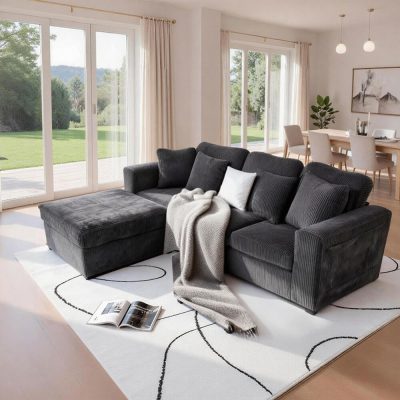
A small living room can be surprisingly difficult to furnish.
The sofa needs to be comfortable enough for everyday use, large enough for everyone to sit down, and still leave enough room to walk around without having to squeeze sideways between the furniture. Add a coffee table, TV unit, perhaps a floor lamp or a few plants, and suddenly the room feels much smaller than it did on the estate agent’s floor plan.
This is where a corner sofa can make a lot of sense.
An L-shaped corner sofa uses the corner of a room rather than leaving that area empty, while creating a generous seating area in one piece of furniture. But that does not mean every corner sofa is suitable for a small living room. A sofa can look perfectly reasonable in a showroom and feel enormous once it is inside your home.
The trick is not simply to find the smallest corner sofa you can buy. It is to choose one that makes good use of the space you actually have.
Start With the Room, Not the Sofa
One of the easiest mistakes when buying a sofa is to start by looking at the sofa itself.
It is tempting to browse different colours, fabrics and designs, find one you like, and then work out where it might fit. In a small living room, that approach can quickly become a headache.
Before looking at individual sofas, measure the room.
Take note of the length and width of the space, but don’t stop there. Windows, radiators, doors, fireplaces, sockets and built-in cupboards can all affect where the sofa can realistically go.
Pay particular attention to the door and any other points where people need to move through the room. A sofa might fit neatly against two walls but make the route to the kitchen or hallway unnecessarily awkward.
It is also worth considering the space around the sofa rather than just the sofa’s own dimensions. You need enough room to sit down comfortably, get up without bumping into a coffee table and walk through the room without feeling as though you are navigating an obstacle course.
A few minutes with a tape measure can save a surprisingly expensive mistake.
Measure the Sofa’s Full Dimensions
When checking the dimensions of a corner sofa, don’t look only at its overall width.
The length of both sides matters because an L-shaped design extends into the room in two directions. A sofa that is relatively short along one wall may still take up considerable floor space once the return section is included.
Measure:
- Overall width
- Overall depth
- Length of the return section
- Seat depth
- Overall height
- Clearance around doors and walkways
If possible, mark the sofa’s footprint on the floor using masking tape. This is a simple trick, but it gives you a much better idea of how the furniture will feel in the room.
Standing in the space and imagining a sofa is surprisingly unreliable. A taped outline gives you something much more tangible. Walk around it. Open the doors nearby. Imagine carrying a laundry basket through the room. Sit where you expect the sofa to go and look towards the TV.
If the room already feels cramped before the sofa arrives, it probably will not feel better once the cushions are in place.
Think About the Shape of the Room
Not every small living room has the same layout.
A narrow rectangular room presents different challenges from a compact square room. An open-plan living area has more flexibility, while a room with several doorways may leave only one sensible position for a sofa.
This is one reason corner sofas can work particularly well in smaller rooms. Instead of placing two separate sofas in different parts of the room, an L-shaped sofa can follow two walls and create a defined seating area.
That can make the room feel more organised rather than simply filling it with furniture.
There is another benefit, too. Two separate sofas often require more space between them and can create awkward gaps. A corner sofa brings the seating together, leaving more of the remaining floor area available for other uses.
However, don’t assume that the corner of the room is automatically the best place for the sofa. Look at the whole layout first.
Where will the TV go? Which direction will people naturally walk through the room? Will the sofa block a radiator? Is there enough space to open the door fully?
Good furniture placement is really about how the room is used, not just how it looks from the doorway.
Don’t Forget the Entrance
There is a slightly painful lesson many furniture buyers learn too late: fitting a sofa into the room is only half the job.
It also has to get there.
Before ordering a large corner sofa, measure the front door, hallway and any narrow sections leading towards the living room. If you live in a flat, consider the lift or staircase as well.
Corners, stairwells and tight hallway turns can be more restrictive than the living room itself.
Check the packaged dimensions where these are available, rather than assuming that a sofa with a certain width will automatically pass through the front door. A sofa may need to be tilted or rotated during delivery, so available height and turning space can matter just as much as the doorway width.
For UK homes, particularly older properties with narrow hallways or unusual layouts, this is worth taking seriously before placing an order.
Seating Capacity Matters More Than You Might Expect
A small room does not necessarily mean a small household.
A couple may want somewhere to stretch out on a Sunday afternoon. A family might need space for several people to watch television together. Someone who regularly has friends over may value seating capacity even more.
This is where a corner sofa can offer an advantage.
The L-shaped arrangement creates several usable seating positions without requiring two separate pieces of furniture. It also gives one person the option of putting their feet up along the longer section, which can be useful when the sofa doubles as the main place for relaxing in the evening.
Think about how you actually spend time in your living room.
If everyone tends to sit together, a corner sofa can make that feel natural. If the room is mainly used by one person during the day and several people in the evening, having flexible seating positions becomes useful.
The right sofa is not necessarily the one with the most seats on paper. It is the one that suits the way the room is actually used.
Pay Attention to Seat Depth and Comfort
A sofa can fit perfectly and still be uncomfortable.
This is something that is easy to overlook when shopping online because dimensions tell you how much space the sofa occupies, but they do not tell you how it feels to sit on it.
Seat depth makes a noticeable difference. A deeper seat can be great for lounging, while a shallower seat may feel easier to use for sitting upright. There is no universally correct measurement because people’s preferences and body proportions vary.
The internal construction matters as well.
High-density foam can provide a supportive seating surface while retaining a comfortable feel, while springs can contribute to resilience and help the seat recover after use. A combination of the two can offer a useful balance between softness and support.
Scatter cushions can make another difference. They allow you to adjust the support behind your back or at your side, depending on how you are sitting.
If your living room is where you watch films, read, work on a laptop and occasionally take an afternoon nap, comfort becomes much more important than simply choosing something that looks good.
Look Beyond the Upholstery
The fabric is probably one of the first things you notice about a sofa, but it should not be the only thing you consider.
In a small living room, the sofa can become one of the largest visual elements in the space. Texture and colour therefore have a significant effect on how the room feels.
Corduroy, for example, has a distinctive texture that can make a sofa feel warmer and more inviting. It can work particularly well in a relaxed living room where comfort is more important than a formal appearance.
The surrounding furniture matters too.
A textured sofa can work with a simple coffee table, wooden flooring, neutral walls and soft lighting without making the room feel overly busy. If the sofa itself has a strong visual presence, keeping some of the other elements relatively simple can help maintain balance.
There is no need to follow a strict rule about light colours making rooms look bigger or dark colours making them look smaller. The overall combination of colour, lighting, furniture placement and natural light matters far more than one piece of furniture in isolation.
Consider the Frame and Overall Construction
Once a sofa is going to be used every day, what is inside it becomes just as important as what you can see.
The frame provides the basic structure, so stability matters. A well-designed combination of materials can give the sofa a solid foundation and help it cope with regular use.
Some corner sofas use combinations of solid wood, reinforced boards and metal components to create a stronger structure. The exact construction varies between models, so it is worth checking the product specifications rather than assuming that two sofas with a similar appearance are built in the same way.
Weight capacity is another useful specification to look at.
It should not be treated as the only measure of sofa quality, but it gives you an indication of the load the furniture is designed to support. If several people will regularly use the sofa at the same time, this becomes more relevant.
Storage Can Be Useful in a Small Living Room
Small rooms tend to accumulate clutter quickly.
Remote controls disappear between cushions. Phones end up on the coffee table. Magazines, books and chargers have a habit of spreading across whatever flat surface is available.
This is where small pieces of built-in storage can be surprisingly useful.
Some corner sofas include storage pockets on the sides, providing a convenient place for smaller everyday items without requiring another piece of furniture.
It will not replace a proper storage unit, of course. But in a compact living room, even a small amount of built-in storage can help keep the main surfaces clear.
That matters because visual clutter can make a small room feel even smaller.
Leave Enough Space Around the Sofa
It is easy to become focused on whether the sofa fits and forget about everything else.
Try to leave sensible walking routes around the furniture. You should not have to squeeze between the sofa and the coffee table every time you want to stand up.
The exact amount of space you need depends on the layout and how the room is used, but the principle is straightforward: don’t use every available centimetre simply because you can.
A slightly smaller sofa with comfortable circulation around it can make a room feel much better than a larger sofa that technically fits but dominates the entire floor.
This is particularly important in a living room that also connects to another part of the house.
What About a Coffee Table?
A corner sofa often changes the relationship between the seating and the coffee table.
With a conventional sofa, you might naturally position the table directly in front of it. With an L-shaped sofa, you need to consider the return section as well.
A smaller rectangular, square or round coffee table can sometimes work better than a large rectangular one. The key is to maintain enough space for people to sit down and move around it comfortably.
Don’t feel obliged to fill the empty area in front of a corner sofa just because there is space available. In a small room, keeping the centre relatively open can make the whole layout feel lighter.
Think About How the Room Will Change Over Time
Furniture tends to stay in a home for much longer than expected.
The way you use your living room might change. Children grow up, working arrangements change, furniture gets moved, and you may eventually want to rearrange the room.
A corner sofa is less flexible than two separate sofas, so consider how permanent you want the layout to be.
If you know the sofa will stay in the same position for years, and the L-shaped arrangement suits the room, that may not be a problem at all.
But if you regularly rearrange your furniture, check whether the sofa’s orientation and configuration will continue to work for you.
It is a small consideration at the time of purchase, but it can make a big difference later.
The best corner sofa is ultimately not the biggest one you can fit through the door. It is the one that gives you a comfortable place to live without making the room feel as though the furniture has taken over.