

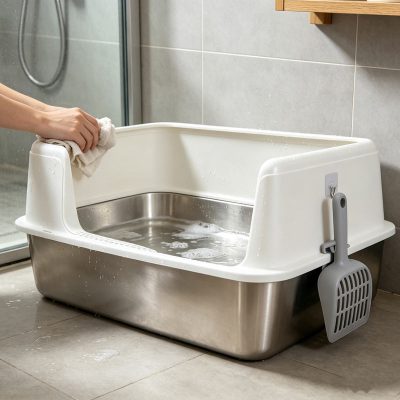
If you keep a cat indoors, there is one household job that is easy to put off but difficult to ignore for long: cleaning the litter tray.
This becomes particularly noticeable in the sort of homes many of us have in the UK. A litter tray may sit quietly in the hallway, in a utility room, beside the back door or in a spare corner of the kitchen. There may be perfectly good reasons for putting it there, but these are also places where people regularly pass through or spend time.
And unfortunately, litter tray smells have a habit of travelling.
Most cats are remarkably clean animals. They spend a great deal of time grooming themselves and generally prefer their toilet area to be clean as well. Leave a tray dirty for too long, and some cats will simply decide that it is no longer somewhere they want to use.
That can quickly become a much bigger problem.
A cat that starts using the corner of the hallway, a rug or somewhere behind the furniture is considerably harder to manage than a cat using a properly maintained litter tray. Nobody wants to discover that first thing in the morning.
The good news is that keeping a litter tray clean does not need to become a major chore. A simple routine, followed consistently, is usually enough.
Why a clean litter tray matters to your cat
Cats do not all have exactly the same standards.
Some seem perfectly happy to use a tray that their owner considers slightly overdue for cleaning. Others can be surprisingly fussy. You may have one cat that walks straight into the tray without a second thought and another that refuses to go near it if there is already too much waste inside.
There is a practical reason behind this.
A litter tray gradually becomes less appealing as waste, moisture and odour build up. Even when the tray does not look particularly dirty from across the room, your cat is much closer to it and may be far more sensitive to the smell.
For an indoor cat, there are also fewer alternatives. If the tray is the only suitable toilet area available and it becomes unpleasant, the cat may start looking elsewhere.
That is why regular cleaning is not simply about keeping the house smelling fresh. It helps maintain a place where your cat is comfortable doing something it needs to do every day.
What if your cat suddenly stops using the tray?
A dirty litter tray can certainly be one reason a cat starts avoiding it, but it should not automatically be blamed for every change in toilet behaviour.
If a cat suddenly stops using a clean tray, other factors may be involved. Changes around the home, stress, a dislike of a particular type of litter or an underlying health problem can all affect behaviour.
So if the tray is clean and your cat’s toilet habits suddenly change, it is worth looking beyond cleaning alone.
For ordinary day-to-day maintenance, though, keeping the tray clean is one of the simplest things you can control.
A simple litter tray cleaning routine
You do not need an elaborate cleaning timetable. A basic daily, weekly and monthly routine is enough for most households, with adjustments depending on the number of cats and how often the tray is used.
Daily: remove waste and check wet areas
The daily job is the one that makes the biggest difference.
Remove faeces and any clumps of heavily soiled litter, then have a quick look around the tray for wet areas. If moisture has collected underneath the main layer of litter, remove the affected material rather than leaving it there to build up.
This does not usually take more than a few minutes.
It is also much easier to scoop a tray every day than to deal with several days’ worth of waste in one go. Regular removal keeps the amount of unpleasant material inside the tray under control and helps prevent strong smells from developing.
If you have several cats sharing a tray, you may naturally need to do this more frequently.
Weekly: empty the litter and wash the tray
Daily scooping is not a replacement for properly cleaning the tray.
About once a week, empty the remaining litter and wash the tray thoroughly. Warm water and a suitable pet-safe cleaner are generally enough for routine cleaning.
Pay attention to corners and edges, where small amounts of waste can collect. Once washed, rinse the tray properly and let it dry before adding fresh litter.
The exact frequency does not have to be rigid. A tray used heavily may need cleaning more often, while a lightly used tray may remain in good condition for a little longer.
The useful principle is simply to avoid allowing the tray to become visibly dirty, strongly scented or difficult to clean.
Monthly: check the condition of the tray itself
There is no rule saying a litter tray must be replaced every month.
The monthly check is really about looking at its condition.
Plastic trays can gradually become scratched, rough or damaged through regular use. Cracks and deep scratches are particularly unhelpful because they can make the surface harder to clean properly and give dirt somewhere to collect.
If the tray is still smooth, intact and easy to wash, there is no need to replace it just because another month has passed.
When it becomes damaged or unnecessarily difficult to clean, replacing it makes much more sense.
How clean does a litter tray really need to be?
This is where some cat owners can make the job harder than necessary.
A litter tray does not need to be perfectly spotless every minute of the day. Your cat is going to use it again, after all.
The aim is to prevent waste and moisture from accumulating and to keep the tray in a condition that your cat is comfortable using.
There is a useful difference between clean and unused.
A tray that has just been washed and filled with fresh litter is obviously going to look pristine. A tray that your cat has used during the day will not. That is perfectly normal.
What you want to avoid is the point where waste is left sitting there, wet areas are building up, and the smell becomes noticeable around the room.
For most households, regular scooping and a proper weekly wash are enough to stay comfortably on the right side of that line.
Keeping odour under control in shared parts of the home
Where you keep the litter tray makes a difference to how important this routine feels.
A tray hidden away in a separate room may be less noticeable when there is a little odour. Put the same tray beside the kitchen, in a hallway or near a utility room door and the situation becomes rather different.
This is one reason indoor cat owners often benefit from making cleaning part of their normal daily routine rather than waiting until the smell becomes obvious.
You do not need to cover the problem with strong fragrances either. A heavily perfumed room does not make a dirty litter tray cleaner, and some cats may not appreciate strong scents around their toilet area.
Regular waste removal is usually a much more effective solution.
It also means you are less likely to reach the point where you walk into the room and immediately think, “I really should have cleaned that yesterday.”
A good litter tray can make cleaning much easier
Cleaning frequency is only part of the equation.
The design and condition of the tray itself can make a noticeable difference to how easy the routine is to maintain. A tray with a smooth surface, sensible shape and easy access to the corners is much less frustrating to clean than one that traps litter and waste in awkward places.
That matters because household routines work best when they are easy to repeat.
If cleaning the tray takes only a few minutes, it is much easier to do it every day. When the tray is awkward to empty, difficult to wash or already damaged, the job becomes something you are tempted to put off.
For the cat, a clean and comfortable toilet area is simply a better place to use. For the owner, an easy-to-clean tray means less time dealing with litter, moisture and unpleasant smells.
It is a small example of something that is often true around the home: the right product can make a routine easier to maintain.
The routine does not need to be complicated
For a typical indoor cat household, the basic pattern is straightforward.
Remove waste and check wet areas each day.
Empty and wash the tray properly on a regular weekly basis.
Once a month, take a moment to check whether the tray is still in good condition, replacing it if damage has made it difficult to clean.
You can adjust that routine depending on how many cats you have, how often the tray is used and how quickly it becomes soiled. The important thing is consistency rather than following a rigid timetable.
A few minutes of maintenance is much easier than dealing with a cat that has decided the litter tray is no longer acceptable.
And, of course, it is much nicer for everyone when the hallway or kitchen does not smell like a cat toilet.
Making life easier for both you and your cat
Indoor cats rely heavily on their owners to provide a suitable and comfortable toilet area. Keeping the litter tray clean is one of those simple responsibilities that can have a surprisingly large effect on everyday life.
There is no need to become obsessed with making the tray look brand new after every use. Regular waste removal, proper weekly cleaning and an occasional check of the tray itself are usually enough to keep things under control.
A high-quality litter tray can make that routine even easier. When the surface is easy to clean and the tray remains in good condition, there is less effort involved for the owner and a more comfortable environment for the cat.
That is really what you are aiming for: a litter tray your cat is happy to use and a cleaning routine that is easy enough for you to keep doing.
Home Pet Essentials offers a range of cat and pet products for everyday life, including practical options for indoor cat owners. And if your home also has a small garden or patio, there are compact two-person garden chair sets available for making better use of limited outdoor space without taking up too much room.