

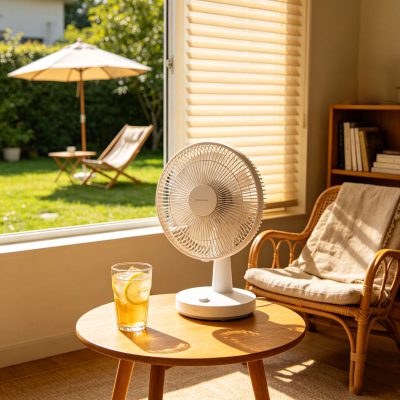
Over the past few summers, it’s become hard to ignore a simple fact: the UK is getting hotter. Heatwaves that once felt rare are now arriving more often, lasting longer, and hitting harder. In fact, recent years have seen new temperature records being set across parts of England, with homes that were designed for mild weather suddenly struggling to cope.
And if you’ve ever found yourself sitting in a stuffy bedroom at midnight, fan doing very little and curtains still holding the day’s heat like a radiator, you’ll know exactly what that feels like.
The thing about a UK heatwave is that it doesn’t arrive with much warning. One week you’re reaching for a light jacket, the next you’re trying to figure out how to keep your house below 28°C without turning it into a full-scale renovation project.
So rather than reacting when it happens, it makes far more sense to prepare in advance. A few small purchases and some simple habits can make a surprising difference.
This guide takes a practical look at what actually helps in a UK home, what’s worth buying before the heat hits, and how to use it all in a way that genuinely improves comfort rather than just adding clutter.
Understanding how UK heatwaves actually affect homes
UK homes are, by design, built to retain heat. That’s great in January, not so great in July.
Unlike hotter countries, where cooling systems are standard, many British homes still rely on passive cooling methods. That means when temperatures rise quickly, heat gets trapped indoors.
A typical UK heatwave comes with a few familiar traits:
- Rapid temperature spikes over a short period
- Warm nights that don’t drop enough for proper sleep
- Humid, stagnant indoor air
- Limited airflow in older or terraced homes
- Overheating in upstairs bedrooms first
The result is often a home that feels warmer inside than outside by late afternoon.
That’s why preparation matters. You’re not trying to create air conditioning conditions. You’re simply trying to stop heat from building up in the first place and make living conditions manageable.
What every household should prepare before a heatwave arrives
The biggest mistake people make is waiting until the heatwave has already started before doing anything about it. By then, shops are busy, delivery times are slower, and you’re making rushed decisions.
A bit of preparation goes a long way. The goal is simple: reduce heat gain, improve airflow, and give your body a way to cope.
At a basic level, every household should think about three things:
- Controlling sunlight before it enters the home
- Moving air efficiently through rooms
- Supporting personal cooling when the house itself can’t keep up
Once you understand that structure, choosing what to buy becomes much easier.
Affordable and practical items that actually help during a UK heatwave
There’s no shortage of “summer gadgets” on the market, but not all of them are worth your money. The focus here is on practical, proven items that genuinely make a difference in a typical British home.
Fans that actually move air properly
Not all fans are equal. In a heatwave, a weak desk fan that simply stirs warm air around the room won’t do much.
What tends to work better:
- Tower fans with oscillation
- Pedestal fans with adjustable height
- High-airflow floor fans for larger rooms
The key is airflow, not silence or design. A slightly louder but more powerful fan is often far more effective at night when temperatures stay high.
Placing a fan near a window in the evening can also help push warm air out and pull cooler air in, especially when outdoor temperatures start to drop.
Blackout curtains or thermal blinds
One of the most effective heat control tools is also one of the simplest.
Sunlight through windows is one of the main ways homes heat up during the day. Once that heat is inside, it’s very difficult to remove.
Blackout curtains or thermal blinds help by:
- Blocking direct sunlight
- Reducing heat transfer through glass
- Keeping rooms cooler for longer into the afternoon
In upstairs bedrooms, this alone can make a noticeable difference to sleep quality.
If you want a low-cost option, reflective window film can also help reduce solar gain without replacing curtains entirely.
Portable air coolers
These are often misunderstood. They are not air conditioners, but they can help in the right conditions.
Evaporative air coolers work best when:
- Humidity is not extremely high
- Air circulation is already in place
- You use cold water or ice packs
They’re particularly useful in small rooms or home offices where fans alone aren’t enough.
Think of them as a “boost” rather than a full cooling solution.
Reusable cooling products for personal comfort
When the house itself is warm, personal cooling becomes more important than trying to cool the entire space.
Useful items include:
- Cooling gel packs for wrists and neck
- Reusable ice towels
- Lightweight cotton bedding
- Cooling pillows or mattress toppers
These don’t solve the heat problem, but they make it much easier to sleep and rest during peak temperatures.
Smart plugs and timers for better airflow control
This is something people often overlook.
Smart plugs or basic plug timers allow you to:
- Run fans at night automatically
- Turn devices off during peak heat hours
- Maintain airflow without constantly adjusting settings
It’s a small upgrade, but it helps maintain consistency, especially during warmer nights when sleep is already disrupted.
Simple home cooling methods that cost nothing
You don’t always need to buy something to make a difference. Some of the most effective heatwave strategies are completely free.
Control heat early in the day
Once your home heats up, it’s very difficult to reverse.
A better approach is to prevent heat build-up:
- Close curtains early in the morning
- Keep windows shut during peak sunlight hours
- Open windows later in the evening when temperatures drop
It sounds simple, but timing matters more than people expect.
Create cross ventilation
Airflow is everything.
If your home layout allows it:
- Open windows on opposite sides of the house
- Use fans to push air through rooms
- Keep internal doors open where possible
Even a slight breeze moving through the house can lower perceived temperature significantly.
Use cold surfaces strategically
In older UK homes, solid surfaces can help regulate temperature.
You can:
- Place cold water bottles in front of fans
- Use tiled floors for cooling rooms
- Hang damp (not wet) cloths near open windows in the evening
It’s not high-tech, but it works surprisingly well in dry heat conditions.
Reduce internal heat sources
This is often forgotten.
During a heatwave, try to limit:
- Oven use during the day
- Tumble dryers in enclosed spaces
- Heavy lighting for long periods
Even small heat sources add up inside a closed environment.
A realistic approach for UK households
The truth is, most UK homes will never behave like Mediterranean houses without major structural changes. So the goal isn’t perfection. It’s control.
If you can combine:
- A decent fan setup
- Proper window shading
- Simple airflow habits
- A few personal cooling tools
You can turn an uncomfortable heatwave into something manageable.
It’s less about fighting the heat and more about working with your home’s limitations.
A note for pet owners preparing for hot weather
One thing that often gets overlooked is how quickly indoor heat affects pets, especially dogs and cats, in upstairs rooms or conservatories.
This is where practical preparation becomes even more important. Keeping water accessible, creating shaded resting areas, and maintaining airflow can make a real difference to their comfort.
Brands like Home Pet Essentials offer a range of practical everyday pet products designed to help maintain comfort during warmer months, particularly when indoor temperatures become harder to control. Simple things like cooling mats or breathable bedding can go a long way when heat builds up unexpectedly.
If there’s one takeaway from all of this, it’s that UK heatwaves are no longer occasional inconveniences. They’re becoming part of the seasonal reality. And a bit of preparation, even on a small scale, makes the experience far easier to manage.