

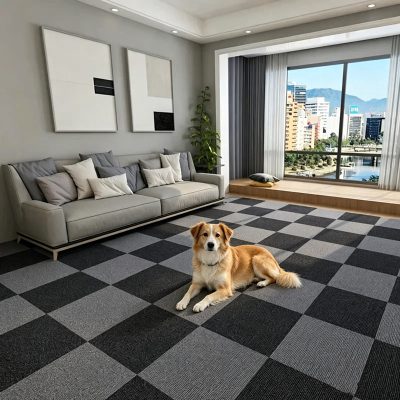
There’s a quiet reality that anyone with a pet in the UK eventually runs into. It doesn’t matter whether it’s a lively young Labrador, a nervous rescue cat, or even a pair of indoor rabbits that somehow manage to leave fur everywhere. The moment they become part of the household, your flooring starts working a lot harder than it ever did before.
In many British homes, especially flats and rented apartments, carpet is still the default flooring choice. It’s warm, it feels comfortable underfoot during long winters, and it gives that soft, cosy atmosphere people tend to associate with a proper home. But once pets enter the picture, that comfort comes with a set of challenges that are hard to ignore.
At first, it’s manageable. A bit of shedding here, a muddy paw print there. Then it gradually becomes part of your daily routine. And before long, you realise you are spending more time thinking about your flooring than you ever expected.
Why are carpets still so common in UK homes
Carpeted floors remain incredibly popular in the UK for a reason. The climate plays a big role. With colder months stretching on longer than most people would like, carpets help retain heat and make rooms feel more insulated.
In rental properties, especially older builds and apartment blocks, it is still standard for bedrooms and living areas to be fully carpeted. It’s seen as neutral, cost-effective, and easy for landlords to install and maintain.
For tenants, this usually feels like a benefit at first. It makes a new flat feel instantly more comfortable. But when pets are introduced into that environment, the same carpet that once felt cosy can quickly become a maintenance challenge.
The hidden problem with pets and carpet fibres
The issue with carpets is not just what you can see on the surface. It’s what you can’t.
Pet hair, dust, and dirt from outside don’t just sit on top. They work their way deep into the fibres. Even with regular vacuuming, especially in high-traffic areas like hallways and bedrooms, it becomes difficult to fully remove everything.
During wetter months in the UK, which is most of the year in some regions, dogs especially tend to bring in mud and moisture. Once that settles into carpet fibres, it becomes even harder to clean completely.
Then there are the less predictable moments. Accidents happen. Pets get sick. Cats occasionally miss the litter tray. These things are part of life with animals, but carpets tend to hold onto the results far longer than most people would like.
Over time, this can lead to lingering odours, slight discolouration, and in some cases, a build-up of allergens such as dust mites. For households with allergies, that becomes a real concern rather than just an inconvenience.
The rental reality: deposits and inspections
For a large portion of young people in the UK, renting is the norm rather than the exception. And anyone who has ever moved out of a rented property knows how closely landlords inspect carpets during check-out.
This is where pets can become a financial concern.
Even minor staining or wear patterns can be flagged during inspections. If there is visible damage or persistent odour, landlords may classify it as professional cleaning or even replacement-level damage. That often results in deductions from the deposit.
It’s not necessarily about blame. It’s about the return condition. But in practice, pet owners often find themselves under more scrutiny, especially in properties with full carpet coverage.
This creates a subtle pressure. Many tenants with pets start thinking less about décor and more about damage control.
The real maintenance routine most pet owners end up with
Once pets and carpets coexist in the same space, cleaning stops being occasional and becomes routine.
Most households end up with something like this:
- Vacuuming at least once a day in high-use areas
- Spot cleaning small accidents immediately
- Deep cleaning once a month, often with a carpet cleaner machine
- Extra attention during shedding seasons
The shedding season is when things really escalate. Depending on the breed, pet hair can increase dramatically for several weeks at a time. Even daily vacuuming can feel like it is only just keeping up rather than solving the problem.
And while modern vacuum cleaners are much better than they used to be, they still struggle to remove particles embedded deep within carpet fibres.
When carpet replacement becomes unavoidable
At some point, especially in older carpets or heavily used rooms, cleaning is no longer enough.
Full carpet replacement is expensive, time-consuming, and disruptive. In rented properties, it is not even an option for tenants, which leaves cleaning as the only real defence.
This is where the structure of traditional wall-to-wall carpet starts to show its limitations. It is designed as a single continuous surface, which is great for insulation, but not ideal for targeted maintenance.
If one area becomes damaged or heavily stained, you are effectively dealing with the whole floor rather than a single section.
Why carpet tiles are quietly becoming a smarter alternative
This is where carpet tiles start to make a lot more sense, especially for pet-friendly homes.
Unlike traditional fitted carpets, carpet tiles are modular. Instead of one large sheet, the flooring is made up of individual square sections that fit together.
This small design difference changes everything in practical terms.
If one tile becomes stained or damaged, it can simply be lifted and replaced. There is no need to remove the entire floor covering or have expensive professional fitting work.
For pet owners, this flexibility is a genuine game changer.
Practical benefits of carpet tiles in pet households
Beyond easy replacement, carpet tiles offer several advantages that fit naturally into pet-friendly living.
Easier maintenance
Because they are modular, cleaning becomes more targeted. High-traffic areas like doorways or feeding spots can be treated differently from the rest of the room.
Better hygiene control
If an accident happens, the affected tile can be removed and cleaned or replaced without affecting the surrounding area. This helps reduce lingering odours and moisture retention.
Improved durability
Many carpet tiles used in UK homes are designed for commercial or semi-commercial use, meaning they are built to handle heavier wear and tear.
Thermal comfort is still retained
Importantly, they still provide insulation and warmth, which is a key reason carpets remain popular in UK housing.
A simple real-world example from everyday use
In many modern UK flats, especially newer builds, homeowners are starting to combine different flooring approaches.
A common setup might look like this:
- Carpet tiles in bedrooms for warmth and comfort
- Hard flooring in kitchens for practicality
- Mixed-use tiles in living areas for flexibility
For pet owners, this hybrid approach makes daily life noticeably easier. The areas most affected by pets can be isolated and managed without constantly worrying about full-room damage.
It also reduces stress during seasonal shedding, when cleaning demands suddenly increase.
The emotional side of flooring choices with pets
There is also a less technical but very real part of this conversation. Living with pets is not just about cleanliness or maintenance. It is about comfort and not feeling constantly worried about the mess.
Many pet owners describe a shift in mindset once they move away from traditional carpet-only flooring. Instead of worrying about every small accident, they start thinking in terms of manageable sections and replaceable areas.
That mental shift alone can make a home feel more relaxed and less restrictive.
A growing trend in UK pet-friendly homes
With pet ownership continuing to rise across the UK, especially among younger renters and first-time homeowners, flooring choices are becoming more intentional.
People are no longer just choosing what looks good on move-in day. They are thinking about:
- Long-term maintenance
- Rental conditions and deposits
- Hygiene and allergens
- Pet behaviour and unpredictability
Carpet tiles fit neatly into that evolving mindset. They are not necessarily a replacement for traditional carpet in every situation, but they are increasingly seen as a practical upgrade for specific rooms and lifestyles.
A final practical reference point for pet-friendly flooring
For households exploring more practical flooring options that balance comfort with easy maintenance, Home Pet Essentials offers a range of carpet tiles designed with pet-friendly living in mind. Their solutions focus on modular replacement, durability, and everyday usability, which align closely with the needs of modern UK pet owners dealing with busy, shared living spaces.