

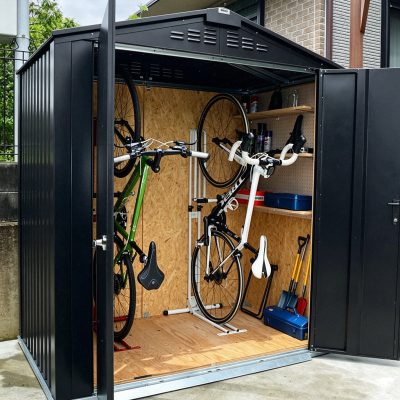
If you’ve ever searched for a garden shed in the UK, you’ve probably seen the same sizes over and over again.
6×4.
8×6.
10×8.
And if you’re being honest, there’s a good chance those numbers didn’t really mean much at first.
Most people don’t naturally visualise shed sizes. They see dimensions listed online, scroll through a few product photos, and think, “Yeah, that looks about right.” Then the shed arrives, and suddenly reality kicks in.
Some people realise they bought far too small and can barely fit a lawnmower inside once the bikes go in. Others end up with a massive metal shed swallowing half the garden for no real reason.
It happens constantly.
Garden sheds are one of those things UK homeowners usually buy only once every several years, so most people simply don’t have a good sense of scale beforehand. And because British gardens vary so much in shape and size, the “perfect” shed depends less on trends and more on daily life.
Do you just need somewhere to stop the garden tools from cluttering up the patio?
Are you storing bikes because the garage is already full?
Do you secretly want a little DIY workspace where nobody interrupts you for an hour?
Those details matter far more than people think.
In Britain especially, a garden shed is rarely just a shed anymore. It becomes overflow storage, a bike shelter, a mini workshop, a gardening station, or sometimes the unofficial “dad escape room” at the end of the garden.
The trick is choosing a size that actually works for your lifestyle instead of guessing based on product photos.
Why Shed Size Confuses So Many People
One of the biggest reasons people choose the wrong garden shed size is that online measurements sound deceptively large.
For example, many first-time buyers assume a 6×4 shed must be spacious because six feet sounds fairly wide. But once shelves, tools, and storage boxes go inside, the usable walking space disappears surprisingly fast.
Another issue is that people often underestimate future clutter.
Right now, you might only need room for:
- A lawn mower
- A strimmer
- A few garden tools
But six months later:
- Two bikes appear
- Plant pots pile up
- Outdoor cushions need winter storage
- A pressure washer shows up
- Half-used bags of compost somehow multiply
Garden storage has a strange way of expanding over time.
That’s why experienced homeowners almost always give the same advice:
If you’re stuck between two sizes, the bigger one is usually the safer choice.
Especially in the UK, where garages are often small or already packed with boxes nobody has opened since 2017.
The 6×4 Garden Shed
The 6×4 garden shed is probably the most common starting point for smaller UK homes.
It works best for people who mainly need practical outdoor storage rather than a full workspace.
A good way to picture it is this:
A 6×4 shed is roughly large enough to stand inside comfortably while storing essential garden equipment around the edges.
Typical uses include:
- Garden tools
- Folding chairs
- Small BBQ storage
- Lawn mower
- Strimmer
- Outdoor toys
- Basic bike storage
- Bags of compost and soil
For many terraced houses or compact suburban gardens, this size feels balanced. It doesn’t dominate the outdoor space, and it usually fits neatly against a fence or side return.
This is also the size many first-time homeowners choose because it feels affordable and manageable.
But here’s where people get caught out.
A 6×4 shed can technically fit bicycles, but once two adult bikes go inside, usable space shrinks quickly. Add shelves or storage bins, and suddenly everything becomes awkward to access.
This is one of the most common metal shed mistakes in the UK:
people buy a small shed thinking they’ll “keep things minimal”, then realise they’re playing garden-storage Tetris every weekend.
Another issue with smaller sheds is airflow.
Compact metal sheds can become humid surprisingly quickly if ventilation is poor. Tools start rusting, cardboard boxes absorb moisture, and the whole space develops that classic damp shed smell.
That’s why proper ventilation matters even in smaller models.
A 6×4 shed is ideal if:
- Your garden is limited in size
- You mainly need tool storage
- You only have one bike
- You want low-maintenance outdoor storage
- You don’t plan to spend time working inside the shed
For many households, it’s enough.
But for growing families or hobby-heavy households, people often outgrow it faster than expected.
The 8×6 Garden Shed
This is where things start getting genuinely practical.
The 8×6 garden shed is often considered the sweet spot for UK families because it balances storage capacity without overwhelming the garden.
An 8×6 shed gives you enough room to:
- Store multiple bicycles
- Organise garden tools properly
- Add shelving
- Store outdoor furniture cushions
- Keep seasonal decorations
- Create a small DIY workstation
This extra breathing room makes a huge difference.
You’re no longer just stacking items on top of each other. You can actually move around inside without immediately knocking something over.
A lot of people upgrading from a 6×4 say the same thing:
“I should’ve bought this size in the first place.”
For bike storage especially, 8×6 works very well.
In many UK homes, bicycles have become awkward storage problems. Families now often own:
- Mountain bikes
- Kids’ bikes
- E-bikes
- Scooters
Leaving them outside all year in British weather isn’t ideal, and theft concerns have also increased significantly in recent years.
An 8×6 metal garden shed gives enough room to secure bikes while still leaving storage space around them.
This size also suits people who enjoy gardening more seriously. Once you start collecting tools, pots, fertilisers, hoses, seed trays, and seasonal equipment, storage needs escalate quickly.
Another underrated advantage is organisation.
Larger sheds reduce stress because everything has a proper place. That sounds dramatic, but anyone who has spent twenty minutes looking for pruning shears in a cramped shed knows exactly what that means.
In terms of value, 8×6 often hits the best balance between:
- Cost
- Usability
- Garden footprint
- Long-term flexibility
For many UK households, it’s realistically the safest all-round choice.
The 10×8 Garden Shed
Once you move into 10×8 territory, you’re no longer buying “just storage”.
You’re creating usable outdoor space.
This size works particularly well for:
- Dedicated workshops
- Serious gardening setups
- Motorcycle storage
- Home gym equipment
- Large family storage
- DIY projects
- Small business stock storage
A 10×8 shed finally gives enough room to divide areas naturally.
For example:
- One side for bikes
- One side for shelving
- A back wall for tools
- A small workbench near the entrance
That flexibility completely changes how the shed feels.
Instead of becoming a clutter dump, it starts functioning like a proper extension of the home.
This has become increasingly common in the UK over the past few years. As houses get more expensive and garages become multipurpose storage zones, homeowners are relying on garden sheds more heavily than before.
Some people even use large sheds as hybrid hobby spaces:
- Cycling maintenance areas
- Fishing gear rooms
- Craft spaces
- Woodworking corners
- Gardening prep stations
And honestly, many people simply enjoy having a quiet place away from the house for a bit.
The downside is obvious though.
A 10×8 shed requires:
- More garden space
- Higher upfront cost
- Better groundwork
- More careful positioning
In smaller British gardens, an oversized shed can accidentally make the whole outdoor area feel cramped.
That’s why proportion matters.
A large shed should feel integrated into the garden rather than dominating it.
Common Metal Shed Mistakes People Regret Later
No matter which size you choose, certain mistakes appear constantly.
And most of them are completely avoidable.
Buying Based Only on Price
Cheap metal sheds often look similar online.
But thinner steel panels, weak roofing, poor ventilation, and flimsy doors become obvious after a few months of British weather.
A shed is one of those products where “cheap now, expensive later” happens surprisingly often.
Choosing Too Small
This is easily the most common regret.
People focus on saving money or preserving garden space, then discover they have no room left once everything goes inside.
Future-proofing matters.
Storage needs nearly always grow.
Ignoring the Shed Base
A poor foundation causes endless problems:
- Water ingress
- Uneven doors
- Structural instability
- Condensation
- Premature rust
A solid, level base matters just as much as the shed itself.
Concrete, paving slabs, or a properly prepared metal shed base are all far better than placing the shed directly on grass.
Forgetting About Access Space
This one catches people out all the time.
The shed dimensions may technically fit the garden, but can you:
- Open the doors fully?
- Move bikes in and out comfortably?
- Walk around the sides?
- Reach the back wall?
Usability matters more than squeezing in the largest possible model.
Poor Ventilation
Metal sheds naturally experience temperature changes.
Without airflow, condensation builds up quickly, especially during colder UK months.
That’s why ventilation panels, roof vents, and sensible organisation are important.
People often blame the shed material itself when the real problem is trapped moisture.
Storing Wet Items Inside
Sounds obvious, but it happens constantly.
Wet hoses, muddy bikes, damp cushions, and rain-soaked tools all increase humidity levels inside metal sheds.
Over time, this creates:
- Rust
- Mould
- Musty smells
- Damp cardboard
- Corrosion
A little airflow goes a long way.
Thinking About the Future Helps More Than You Think
A surprising number of homeowners buy sheds based only on current needs.
But gardens evolve.
Families grow. Hobbies change. Storage expands.
The bike you don’t own yet eventually appears. Then another one. Then a pressure washer. Then outdoor furniture. Then gardening equipment you swore you’d never buy.
Suddenly, the shed is full.
That’s why experienced garden planners usually recommend thinking about your life two or three years ahead rather than just today.
Especially in the UK, where outdoor storage space is genuinely valuable.
Why Metal Garden Sheds Have Become More Popular
For years, wooden sheds dominated British gardens.
But metal garden sheds have gained serious popularity recently for a few simple reasons:
- Lower maintenance
- Better security
- Improved durability
- Modern appearance
- Less worry about rot or insects
People are also busier now.
Many homeowners simply don’t want the hassle of repainting or treating timber every year.
Modern galvanised metal sheds have improved a lot compared to older models too. They’re stronger, cleaner-looking, and generally easier to maintain long term.
That’s one reason products like the metal garden shed from Home Pet Essentials have been gaining attention recently. Even though the brand currently focuses on a single shed model, it’s been selling extremely well because it hits what many UK homeowners actually want right now: practical storage, reliable weather resistance, simple design, and everyday usability without unnecessary complications.