

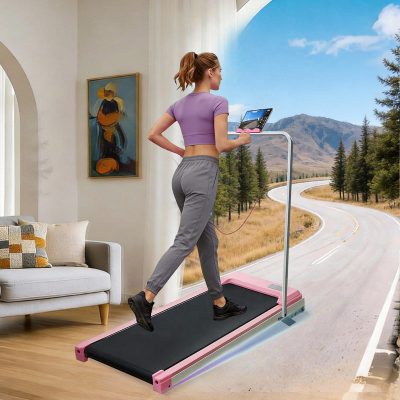
In 2026, more people across the UK are trying to stay active without turning their homes into full gyms.
That is exactly why walking pads and folding treadmills have become so popular.
They are compact, easier to store, and far more practical for smaller British homes. For many people, the goal is not marathon training. It is simply:
- moving more
- increasing daily step count
- burning extra calories
- staying active during long workdays
But this is where a lot of buyers get stuck.
At first, a walking pad sounds perfectly fine. Then the thought creeps in:
“What if I want to jog later?”
That single question is pushing more UK consumers toward 2-in-1 folding treadmills, especially models that can handle both walking and running without taking over the entire room.
Why Walking Pads Became So Popular So Fast
The rise of the walking pad is closely connected to how modern lifestyles have changed.
People are no longer viewing exercise as an all-or-nothing activity.
Instead of:
- hardcore gym sessions
- exhausting cardio plans
- complicated workout routines
many people now focus on:
- increasing daily movement
- improving step count
- Reducing sedentary time
- low-impact calorie burn
- building sustainable habits
And honestly, this approach works for a lot of people.
Walking pads fit perfectly into that mindset because they feel approachable.
Do not need gym clothes.
Do not need an intense workout plan.
Simply walk.
Sometimes while:
- answering emails
- watching Netflix
- listening to podcasts
- scrolling social media
- taking Zoom calls
That convenience is a huge reason why walking pads suddenly became mainstream in the UK.
Especially among:
- remote workers
- apartment residents
- busy parents
- beginners
- people returning to fitness after years away
A walking pad feels less intimidating than a traditional treadmill.
And psychologically, that matters more than most fitness brands realise.
Where Walking Pads Work Extremely Well
Walking pads are genuinely excellent for certain lifestyles.
If your main goal is:
- getting more daily steps
- burning extra calories
- improving circulation
- staying active indoors
- Reducing long sitting periods
Then a walking pad may honestly be enough.
For many people, consistency beats intensity.
A 40-minute walk every day is often more realistic than a complicated training routine that only lasts two weeks before being abandoned.
Walking pads also tend to be:
- slimmer
- lighter
- quieter
- easier to store
- lower in electricity usage
This makes them particularly attractive in smaller UK flats and shared living spaces.
Many newer models slide easily:
- under beds
- under sofas
- beside wardrobes
- understanding desks
And because walking speeds are lower, the noise and vibration are usually much more manageable for upstairs apartments. Most walking pads operate at noise levels around 40 to 55 decibels, which is about as loud as a quiet conversation or the hum of a refrigerator. This means you can walk without worrying about disturbing roommates or neighbours, especially in flats with thin walls or above-ground floors.
That alone can become a deciding factor in British homes.
Nobody wants angry neighbours because their evening cardio session sounds like a construction site.
The Biggest Limitation of a Walking Pad
At some point, many users begin asking the same question:
“What happens when walking stops feeling challenging enough?”
This is where the limitations of a walking pad become clearer.
Most walking pads are designed primarily for low-speed movement. Typically, walking pads have top speeds ranging from 4 km/h to 6 km/h (about 2.5–3.7 mph), which covers comfortable walking but doesn’t allow for true jogging or running. In contrast, most folding treadmills offer higher speed options, often reaching 10 km/h to 12 km/h (around 6–7.5 mph) or even more. This difference in speed range makes a big impact on what type of workouts each machine can support.
Some support light jogging, but many are not built for sustained running.
Common issues include:
- shorter running surfaces
- lower motor power
- less stability
- limited shock absorption
- lower weight capacity
For casual use, this may not matter.
But for people who eventually want:
- interval training
- jogging
- Higher calorie burn
- faster-paced workouts
- running progression
A standard walking pad can start feeling restrictive surprisingly quickly.
And this is exactly why so many UK buyers now lean toward folding treadmills instead.
Not necessarily because they need full running functionality today.
But because they do not want to outgrow the machine in six months.
Why 2-in-1 Folding Treadmills Are Taking Off
The biggest trend in 2026 is not traditional treadmills.
It is the rise of the hybrid model.
The 2-in-1 folding treadmill sits directly between:
- compact walking pad
- full-size treadmill
And for many households, that balance makes a lot of sense.
You can walk casually during the day.
Then fold up the handrail and increase speed when you want a more serious workout.
This flexibility is becoming extremely attractive in the UK because modern consumers want equipment that adapts to them.
Not everyone starts their fitness journey ready to run 5Ks.
A lot of people begin with:
- step goals
- light walking
- low-impact movement
But over time, confidence grows.
And when that happens, many users appreciate having the option to transition into jogging or running without replacing the machine entirely.
Long-term usability is one of the biggest advantages of a folding treadmill.
Functionality Is the Real Difference
When comparing walking pads and folding treadmills, functionality matters more than almost anything else.
At first glance, they can look very similar online.
But in real-world use, the experience can be completely different.
Walking Pad Strengths
- compact size
- easy storage
- lower noise
- lightweight design
- lower power consumption
- ideal for walking while working
- beginner-friendly
Folding Treadmill Strengths
- higher speed range
- better for jogging and running
- stronger motor performance
- more stability
- improved shock absorption
- larger running area
- more workout flexibility
This is why the “best” option really depends on the person using it.
Not everybody needs a machine designed for intense running.
But not everybody stays satisfied with walking forever, either.
Electricity Costs Matter More in the UK Now
One thing British consumers pay far more attention to now is electricity usage.
Energy prices have changed buying behaviour significantly.
People increasingly ask:
- How much power does it use?
- Is it expensive to run daily?
- Can I leave it plugged in?
- Will it increase my bills noticeably?
Walking pads generally consume less electricity because:
- Motors are smaller
- Speed is lower
- Workouts are less intensive
For users simply walking at moderate speeds, operating costs remain relatively low.
Folding treadmills usually use more power, especially during running sessions, because they require:
- stronger motors
- faster belt speeds
- Higher load handling
That said, for most households, the real electricity difference is still relatively manageable unless the treadmill is used heavily every single day.
The larger decision is usually not the electricity itself.
It is whether the machine actually gets used consistently.
A cheaper machine that sits unused in the corner is ultimately more expensive than a slightly pricier one that becomes part of a daily routine.
Some Buyers Overestimate Their Fitness Goals
This happens constantly.
People buy advanced treadmills imagining they will suddenly become ultra-disciplined fitness machines overnight.
Then reality happens.
Work gets busy.
Motivation drops.
The treadmill turns into an expensive clothes rack.
This is one reason walking pads became so popular in the first place. They feel less overwhelmed.
For many users, especially beginners, simpler equipment creates less psychological resistance.
A quick 20-minute walk feels achievable.
A full “workout session” sometimes does not.
This is why choosing based on a realistic lifestyle matters more than choosing based on fantasy fitness ambitions.
Who Should Buy a Walking Pad?
A walking pad makes the most sense if you:
- mainly want higher step counts
- work from home
- live in a small flat
- need ultra-compact storage
- prefer low-impact movement
- want something quiet
- They are focused on general wellness rather than athletic training
It is especially useful for:
- office workers
- beginners
- older adults
- casual users
- people recovering from inactivity
For these users, a walking pad can genuinely improve daily activity levels without making exercise feel intimidating.
Who Should Buy a Folding Treadmill?
A folding treadmill is often the better option if you:
- eventually want to jog or run
- want more workout variety
- care about long-term progression
- prefer stronger performance
- want better cushioning and stability
- Share the machine with multiple users
It is also a smarter choice for:
- fitness enthusiasts
- active households
- users planning weight-loss training
- people transitioning from gym workouts to home workouts
Especially in the UK, where indoor exercise becomes far more important during colder months, having flexible workout options can make a big difference in long-term consistency.
Why Many UK Buyers Are Choosing Hybrid Solutions
The reality is that many people no longer want “fitness equipment.”
They want practical lifestyle tools.
Something:
- compact
- easy to use
- easy to store
- flexible
- realistic for everyday life
That is exactly why 2-in-1 folding treadmills are gaining momentum right now.
They sit in the sweet spot between:
- simplicity
- performance
- convenience
- future-proofing
You can start with walking.
Then gradually increase intensity if your goals change later.
And for many households, that flexibility simply feels safer than buying a machine with very limited capability.
So Which One Is Actually Better?
Honestly, neither option is universally better.
The better choice depends entirely on:
- your space
- your habits
- your motivation
- your long-term goals
If your primary goal is simply moving more and reducing sedentary time, a walking pad can absolutely be enough.
But if you suspect there is even a moderate chance you will eventually want to jog, run, or increase workout intensity, a folding treadmill may save you from needing an upgrade later.
That is why many UK consumers are increasingly choosing compact 2-in-1 folding treadmills. They offer a more balanced middle ground for real-life use rather than extreme fitness scenarios.
Brands like HomePetEssentials are also seeing growing interest in affordable home fitness equipment designed specifically for smaller living spaces. Their range of high-value folding treadmills reflects exactly where the UK market is heading right now: compact, practical fitness solutions that fit naturally into everyday life rather than taking it over.