

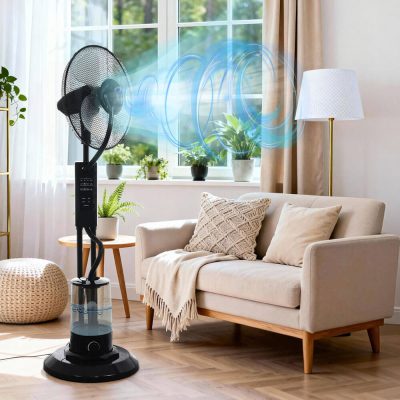
British summers are changing. Heatwaves are no longer a once‑in‑a‑decade event, and many UK homes are now dealing with several weeks each year of uncomfortable indoor heat. Yet air conditioning is still rare, expensive to install, and often impractical for rented properties or older houses. This is exactly where misting fans have started to attract serious attention — not as a gimmick, but as a practical middle ground between a basic electric fan and full air conditioning.
If you’ve seen misting fans advertised online or in garden centres and wondered whether they actually work, how noisy they are, or whether the cold mist might make you ill, you’re not alone. This guide breaks down what a misting fan really is, how it performs in UK conditions, and whether it’s a sensible investment for everyday home use.
What Is a Misting Fan?
A misting fan is essentially an electric fan combined with a fine water‑spray system. As the fan blows air, it releases a light mist of water droplets into the airflow. These droplets evaporate almost instantly, absorbing heat from the surrounding air and creating a cooling effect.
Unlike air conditioners, misting fans do not cool a room by refrigerating the air. Instead, they rely on evaporative cooling, which makes the air feel noticeably cooler on your skin — especially during warm, dry, or moderately humid days.
Misting fans are commonly used in gardens, patios, workshops, conservatories, and increasingly, inside UK homes during summer heat spikes.
How Does a Misting Fan Work?
The science behind a misting fan is straightforward. When water evaporates, it draws heat from the air. A misting fan disperses ultra‑fine droplets that evaporate before soaking surfaces, lowering the perceived temperature.
Most home misting fans include:
- A standard electric fan motor
- A built‑in or external water tank
- A pump that creates a fine mist
- Adjustable mist and fan speed controls
Because the water particles are so small, they cool the air without leaving puddles — assuming the fan is used correctly and not set to maximum mist indoors.
How Noisy Are Misting Fans?
Noise is a common concern, especially for indoor use. In reality, most misting fans are no louder than a standard pedestal fan at comparable speeds.
The sound typically comes from two sources:
- The fan motor
- The water pump (a low humming or gentle vibration)
For domestic models designed for home use, the pump noise is usually subtle and easily masked by normal background sounds. Higher‑powered commercial misting fans, often used in outdoor venues, can be noticeably louder — but these are not typically aimed at household buyers.
For bedrooms or living rooms, choosing a misting fan with multiple speed settings and a quiet pump design is essential.
Cooling Performance Compared to a Regular Electric Fan
This is where misting fans clearly stand apart. A standard electric fan does not lower air temperature; it simply moves warm air across your skin, helping sweat evaporate.
A misting fan, by contrast, can make the air feel several degrees cooler, particularly when:
- The room is warm but not overly humid
- Airflow is unobstructed
- Mist intensity is set appropriately
In UK conditions, where humidity is moderate rather than extreme, misting fans tend to perform well. They won’t turn a heatwave into winter, but they can significantly improve comfort compared to a normal fan — especially in conservatories, loft rooms, or south‑facing spaces.
Is the Cooling Effect Too Damp for UK Homes?
One of the most common worries is moisture. People often ask whether misting fans make rooms damp or uncomfortable.
Used correctly, a home misting fan should not noticeably increase humidity to problematic levels. The key is moderation. Indoors, light mist settings combined with good airflow work best. Overuse of the mist function in small, poorly ventilated rooms can lead to a clammy feeling, which is easily avoided by adjusting settings.
What Size Water Tank Is Suitable for Home Use?
Tank size matters more than many people realise. For domestic misting fans, the most practical range is usually 3 to 5 litres.
- Smaller tanks (under 2 litres) require frequent refilling and can become inconvenient
- Medium tanks (3–5 litres) offer several hours of cooling without constant attention
- Large tanks (8 litres or more) are typically intended for outdoor or commercial use
For most UK households, a 3–5 litre tank strikes the right balance between run time, portability, and ease of use.
Do Misting Fans Use a Lot of Electricity?
Energy consumption is another important consideration. The good news is that misting fans are generally far more energy‑efficient than portable air conditioners.
A typical home misting fan uses roughly:
- 60–100 watts for the fan motor
- A small additional draw for the water pump
In real terms, this is comparable to — or only slightly higher than — a standard pedestal fan. Running costs remain low, making misting fans a sensible option during prolonged warm spells when running an air conditioner all day would be costly.
Are Misting Fans Worth the Money?
Whether a misting fan is worth it depends on expectations. If you’re looking for refrigerator‑level cooling, it won’t replace air conditioning. But if your goal is affordable, flexible cooling that noticeably improves comfort, misting fans make strong sense.
They are particularly suitable for:
- Homes without built‑in air conditioning
- Renters who can’t install permanent systems
- Conservatories and garden rooms
- Occasional heatwaves rather than constant heat
Compared to portable AC units, misting fans are cheaper to buy, cheaper to run, and easier to store.
Does Cold Mist Make You Catch a Cold?
This is a persistent myth. Colds are caused by viruses, not by cool air or mist.
However, discomfort can occur if a misting fan is misused — for example, blowing cold mist directly at one spot on your body for hours. Sensible use avoids this entirely. The best approach is indirect airflow and moderate mist levels, especially indoors.
For households with children or elderly family members, starting on the lowest mist setting is always advisable.
Safety and Usage Tips You Shouldn’t Ignore
To get the best experience from a misting fan, keep these practical tips in mind:
- Use clean, fresh water to prevent mineral buildup
- Avoid pointing mist directly at electrical equipment
- Reduce mist intensity indoors
- Ensure basic ventilation in enclosed spaces
- Empty the tank if the fan won’t be used for several days
These simple habits extend the life of the fan and keep indoor air comfortable.
Are Misting Fans Suitable for the UK Climate?
Despite the UK’s reputation for rain, summer heat combined with moderate humidity actually suits misting fans well. They are not just for Mediterranean climates or outdoor cafés. In British homes dealing with short but intense heatwaves, misting fans provide targeted relief without major installation costs.
Where Home Pet Essentials Fits In
For households exploring practical cooling solutions, Home Pet Essentials offers a range of electric fans designed for everyday comfort, including models suitable for warm indoor environments. While not every home needs a misting function, combining reliable airflow with thoughtful design remains key to staying comfortable during UK summers.
Choosing the right cooling solution is about balance — comfort, energy use, and flexibility. For many UK homes, misting fans sit comfortably in that middle ground, offering relief when it matters most without overcomplicating everyday life.