

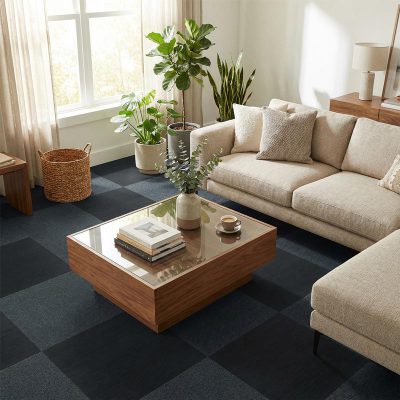
If you’ve ever looked at a worn patch of carpet in your hallway or a scratched-up patch in the living room thanks to muddy paws, you’ve probably wondered whether there’s an easier fix than replacing the whole floor. That’s where carpet tiles come in.
Across the UK, more households are turning to carpet tiles as a practical, affordable and surprisingly stylish alternative to traditional broadloom carpet. The big question many homeowners ask is: Can you lay carpet tiles yourself at home? And if so, how complicated is it?
The good news is that for most UK homes, carpet tiles are absolutely DIY-friendly — provided you understand the basics and avoid a few common mistakes. Here’s a practical, no-nonsense guide to help you decide whether they’re right for you and how to install them properly.
How Popular Are Carpet Tiles in UK Homes?
Carpet tiles were once mainly associated with offices and commercial spaces. But in recent years, they’ve become much more common in British homes — particularly in:
- Home offices
- Rental properties
- Loft conversions
- Playrooms
- Hallways and utility areas
The shift happened for a few simple reasons: flexibility, durability, and ease of replacement. With the rise in remote working across the UK, many households wanted flooring that could handle desk chairs, heavy foot traffic and occasional spills without needing full carpet replacement.
For pet owners, especially, carpet tiles have gained real traction. Instead of worrying about permanent stains or claw damage, you can simply lift and replace one or two tiles.
Why Choose Carpet Tiles Instead of Traditional Carpet?
Before talking about installation, it’s worth understanding why carpet tiles are increasingly popular in UK homes.
1. Easy Replacement
If one tile gets stained by coffee, wine, or pet accidents, you don’t have to replace the entire room. Just swap out the damaged tile.
2. Great for Pets
For households with dogs or cats:
- Tiles are easier to clean.
- Individual pieces can be removed for deeper cleaning.
- Many options are stain-resistant and anti-static.
- Non-slip backing helps prevent sliding during zoomies.
3. Budget-Friendly
You can install them gradually if needed. If you’re renovating one room at a time, carpet tiles make budgeting easier.
4. Practical for the UK Climate
The UK’s damp and changeable weather often means wet shoes, muddy paws and higher indoor moisture levels. Carpet tiles allow better airflow beneath certain types and make maintenance simpler compared to fitted carpet glued wall-to-wall.
Can You Lay Carpet Tiles Yourself?
In most cases, yes.
Carpet tiles are specifically designed to be DIY-friendly. You don’t need professional stretching tools, grippers or specialist carpet fitters for standard installations.
However, success depends on:
- Proper floor preparation
- Correct tile alignment
- Choosing the right type
If your subfloor is level and dry, a confident DIYer can usually complete a standard room in a day.
Self-Adhesive vs Non-Adhesive Carpet Tiles
Understanding this difference is essential before you begin.
Self-Adhesive Carpet Tiles
These come with a peel-and-stick backing.
Pros:
- Faster installation
- No separate glue required
- Suitable for small rooms or temporary setups
Cons:
- Less forgiving if you misalign a tile
- Can be harder to reposition
- The adhesive may weaken over many years
These are ideal for:
- Home offices
- Playrooms
- Rental properties
Non-Adhesive Carpet Tiles
These require either:
- Carpet tile adhesive
- Tackifier glue
- Or are laid with tight-fitting friction backing
Pros:
- More flexibility
- Easier to lift and replace
- Better for long-term durability
Cons:
- Slightly more preparation required
These are often preferred for:
- Living rooms
- Hallways
- Larger areas with heavy traffic
Step-by-Step Guide to Laying Carpet Tiles at Home
Here’s a straightforward process most UK homeowners can follow.
Step 1: Prepare the Subfloor
This is where many DIY attempts fail.
Your floor must be:
- Clean
- Dry
- Level
- Free of dust and grease
Concrete floors may need a damp-proof membrane if moisture is present — particularly in older UK properties.
Wooden floors should be secured and even. Loose floorboards can cause tiles to shift.
Step 2: Acclimatise the Tiles
Because of the UK’s fluctuating humidity, leave your carpet tiles in the room for 24–48 hours before installation. This helps them adjust to temperature and moisture levels.
Best indoor temperature range: 18–22°C.
Step 3: Plan Your Layout
Avoid starting from one wall.
Instead:
- Measure the room
- Mark the centre point
- Work outward evenly
This prevents awkward, narrow strips along edges.
Use chalk lines to keep everything straight.
Step 4: Lay the Tiles
For self-adhesive:
- Peel the backing carefully
- Align edges precisely
- Press firmly into place
For non-adhesive:
- Apply the recommended adhesive evenly
- Lay tiles snugly, edge to edge
- Roll over with a heavy roller for good bonding
Step 5: Trim Edges
Use a sharp utility knife and a straight edge for clean cuts along walls.
Replace blades frequently for neat edges.
Common Mistakes to Avoid
Even though carpet tiles are beginner-friendly, there are typical errors:
Skipping Floor Prep
Dust and debris weaken adhesion.
Ignoring Tile Direction
Most carpet tiles have arrows on the back. Mixing directions can affect appearance unless you’re deliberately creating a patterned effect.
Installing in Damp Conditions
Avoid fitting during very cold or extremely damp winter days without heating.
Not Buying Extra Tiles
Always order 5–10% extra for future replacements.
Helpful Tips for Better Results
1. Start in the centre, not the corner
2. Use a heavy roller for stronger bonding
3. Keep spare tiles from the same batch
4. For pet homes, choose stain-resistant and anti-slip backing
5. Vacuum regularly to maintain tile edges
Best Time of Year to Install Carpet Tiles in the UK
The UK climate plays a role in installation success.
Ideal Months:
- April
- May
- June
- September
These months usually offer:
- Moderate humidity
- Stable indoor temperatures
- Less condensation
Winter installations are possible, but ensure:
- The room is heated consistently
- Floors are completely dry
- Tiles are acclimatised properly
Are Carpet Tiles Suitable for Every Room?
Generally, yes, but they work particularly well in:
- Bedrooms
- Home offices
- Living rooms
- Hallways
- Pet areas
They are less ideal for:
- Bathrooms
- Very damp basements without moisture control
Why Carpet Tiles Work So Well for Pet Owners
In UK households with pets, flooring needs to handle:
- Mud
- Shedding
- Occasional accidents
- Scratching
High-quality carpet tiles with anti-slip and anti-static properties offer:
- Reduced static shocks
- Better grip
- Easier spot cleaning
- Noise reduction
If you’ve ever worried about noise complaints from downstairs neighbours, carpet tiles can help absorb sound far better than laminate.
A Practical Flooring Option for Modern UK Homes
Carpet tiles are no longer just for offices. For many British households — especially those with pets or busy family life — they offer flexibility, durability and realistic DIY potential.
With proper preparation, moderate weather conditions and careful layout planning, most homeowners can successfully install carpet tiles themselves without professional help.
If you’re looking for reliable options, Home Pet Essentials offers both self-adhesive and non-adhesive carpet tiles designed for UK homes. Their tiles focus on noise reduction, anti-slip backing and anti-static performance — making them particularly suitable for pet-friendly households.