

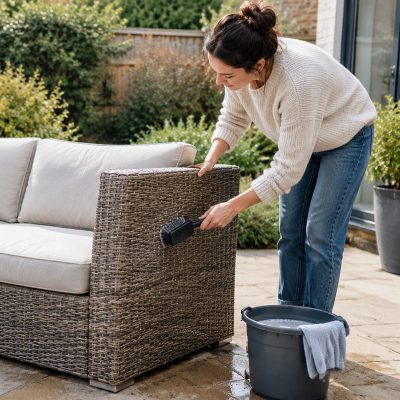
As autumn settles in across the UK, the garden gradually becomes a less inviting place to sit. The evenings draw in, temperatures drop and the rattan sofa that was the favourite spot for summer lunches and afternoon coffee starts to go unused. Before long, the cushions are spending more time getting damp than being sat on.
This is usually the right moment to prepare your garden furniture for winter.
Modern synthetic rattan furniture is designed to withstand outdoor conditions. The weave is generally resistant to rain and UV exposure, while frames made from powder-coated aluminium or steel offer good protection against corrosion. However, weather-resistant does not mean maintenance-free. Dirt can build up between the strands, moisture can linger in cushions, and exposed furniture still has to cope with months of cold, wind and rain.
A little autumn maintenance can help preserve the finish, prevent avoidable damage and make the garden easier to get ready when spring returns. The process is straightforward: clean each component properly, decide where it will be stored and avoid a few common mistakes that can shorten its lifespan.
Cleaning Rattan Garden Furniture Before Winter
Start by removing the cushions, seat pads and any loose accessories. Before introducing water, use a soft brush or a vacuum cleaner with a brush attachment to remove dry leaves, crumbs and dust from the weave.
Pay particular attention to the corners, the underside of the seats and the lower frame. These areas are easy to overlook during everyday use, yet they often collect damp debris and mud splashes.
How to clean the rattan weave safely
For most synthetic rattan garden sofas, warm water and a small amount of mild washing-up liquid are sufficient. Use a soft cloth or non-abrasive sponge to wipe the surface, following the direction of the weave where possible.
A soft-bristled brush or an old toothbrush is useful for reaching dirt trapped between tightly woven strands. Work gently rather than trying to force the brush into every gap.
Rinse away the remaining soap with clean water. A garden hose on a gentle setting is usually suitable, but avoid using a pressure washer directly on the furniture. Excessive water pressure can damage weaker components or force water into joints where it may be difficult to dry.
If you spot green growth or stubborn marks, clean the affected area with soapy water and a soft brush. Avoid bleach, abrasive pads and strong solvents unless the manufacturer specifically recommends them, as these may damage the finish or cause discolouration.
Once the weave is clean, wipe away excess water and allow the furniture to dry in a sheltered, well-ventilated spot. Check the feet and frame as well, removing any remaining dirt before putting the set away.
It is worth inspecting the furniture while you clean it. Loose fittings, damaged strands or chipped paint on the frame are easier to deal with now than after several months in storage.
Cleaning the Cushions and Seat Pads
The cushions often need more attention than the frame. Even when their covers are described as showerproof or water-resistant, they may not be designed to withstand prolonged exposure to rain. Water can enter through seams and zips, leaving the filling damp long after the surface appears dry.
Remove all cushions before cleaning the furniture and check their care labels. Some covers can be machine-washed, while others require hand cleaning or spot treatment. The correct method depends on the fabric, filling and manufacturer’s instructions.
Removing stains without damaging the fabric
Begin by vacuuming the cushions with an upholstery attachment to remove loose dust and crumbs. For everyday marks, mix a little mild detergent with lukewarm water and test it on an inconspicuous area first.
Use a soft sponge or clean cloth to dab the stain gently. Working from the outside towards the centre can help prevent it from spreading. Avoid aggressive scrubbing, which may damage the fibres or push dirt further into the material.
Remove any detergent residue with a clean cloth dampened with fresh water. If the covers are machine-washable, follow the recommended temperature and programme rather than assuming a hotter wash will produce a better result.
Musty smells or visible mould should not simply be covered up with a fabric spray. Follow the manufacturer’s cleaning advice and check whether the filling has also been affected. Severely mould-damaged cushions may require professional cleaning or replacement.
Make sure the cushions are completely dry
Drying deserves as much attention as washing. If the covers are removable, dry them according to their care instructions. Keep the filling in a dry, airy place and allow extra time if it has absorbed moisture.
Avoid placing cushions on radiators or other direct heat sources unless the manufacturer confirms that this is safe. Excessive heat may shrink the fabric or affect its finish.
Before storing them, check the seams, corners and zips for lingering dampness. A cushion that feels dry on the outside may still hold moisture inside.
For winter storage, keep the cushions indoors if possible. A dry spare room, utility room or suitable cupboard is usually preferable to leaving them outside with the furniture. Do not pack them tightly into sealed plastic bags while any moisture remains, as this can encourage mould and unpleasant odours.
Cleaning the Coffee Table and Other Surfaces
A rattan garden set often includes a matching coffee table or side table. The tabletop may need a different cleaning method from the woven frame, depending on whether it is made from glass, wood or metal.
Glass tabletops
Use warm water with a little washing-up liquid and a soft cloth to remove fingerprints, drink marks and general grime. A clean microfibre cloth is useful for drying the glass without leaving excessive streaks.
Check the edges and the points where the glass rests on its supports. Dirt and moisture can collect underneath, particularly around rubber pads and retaining clips.
Only lift the glass if it can be done safely. Large or heavy tabletops are best handled by two people. Once clean, check that the supports are intact and the glass sits securely before returning it to the frame.
If the table will remain outdoors, follow the manufacturer’s advice on whether the glass should stay in place or be removed for winter.
Wooden and metal tabletops
Wood requires a little more care because its resistance to moisture depends on the type of timber and protective finish. Use a suitable cleaner, avoid soaking the surface and follow the manufacturer’s recommendations for any seasonal treatment.
Metal surfaces can usually be cleaned with mild soapy water and a soft cloth. Dry them afterwards, paying particular attention to joints and any areas where the protective coating has chipped. If you notice exposed metal or early signs of corrosion, check which repair products are suitable for that finish.
The aim is to remove summer grime without damaging the surface or leaving moisture in vulnerable areas.
Where to Store Rattan Garden Furniture for Winter
Once the furniture is clean and dry, decide whether to bring it indoors or leave it outside under a suitable cover. The best option depends on the size of your set and the storage space available.
Option 1: Make use of indoor storage space
If you have room indoors, storing the furniture away from the weather offers additional protection. Modular rattan sets are particularly useful here because individual sections can often be separated, making them easier to move through doorways and fit into a garage, spare room or garden room.
British homes also have a few less obvious storage options. An under-stairs cupboard may be suitable for smaller accessories, folded cushion covers or compact seat pads, although a full corner sofa is unlikely to fit. Check that the space is dry and ventilated before storing fabric items there.
A metal garden shed can be useful for furniture frames and smaller pieces, particularly when indoor space is limited. These sheds are common in UK gardens, but they are not necessarily dry or free from condensation. Inspect the roof and floor for leaks, make sure rain cannot enter around the door and allow some air to circulate.
Keep cushions off cold, potentially damp floors by using suitable shelving or raised storage. If the shed is prone to condensation, storing the cushions indoors and leaving only the frame outside may be the more practical arrangement.
Before moving large pieces, measure the available space and check whether the furniture can be dismantled safely. There is little point in squeezing a sofa into a storage area where it blocks access or cannot be moved without damaging the frame.
Option 2: Protect the furniture outdoors with a suitable cover
Not every household has a garage or spare room. In smaller gardens, a shed may already be full of tools, bikes and lawn equipment. If your rattan furniture has to remain outside, a properly fitted garden furniture cover can offer effective protection through the winter.
Choose a cover designed for outdoor furniture, with dimensions suited to your particular set. It should provide adequate protection from rain without being so oversized that it flaps excessively in strong winds.
Look for secure straps or drawcords to hold it in place. Ventilation features are also useful because they allow some air movement and help reduce condensation beneath the cover.
Before covering the furniture, remove all cushions and loose accessories, then make sure the frame and tabletop are clean and dry. Position the set on a firm, well-drained surface rather than wet grass or an area where rainwater collects.
Arrange the furniture so water can drain away instead of pooling on flat surfaces. Avoid leaving the cover resting tightly against the ground, where airflow may be restricted. Follow the manufacturer’s guidance on how the cover should fit and whether any parts of the set need separate protection.
A cover is not a substitute for all maintenance. Check it periodically during winter, especially after heavy rain or strong winds. Clear fallen leaves, remove pooled water and make sure the fastenings remain secure.
Winter Storage Mistakes Worth Avoiding
A few seemingly harmless shortcuts can cause problems over the colder months. Keeping these in mind will help you protect your furniture without making winter maintenance unnecessarily complicated.
Covering furniture while it is still damp
This is an easy mistake when the weather is unpredictable. However, covering wet furniture can trap moisture underneath, particularly when the air is cold and still.
Allow the frame and tabletop to dry thoroughly before fitting the cover. Cushions should be dried separately and stored indoors wherever possible.
Leaving cushions exposed to months of rain
Water-resistant fabric can cope with occasional showers without necessarily being suitable for continuous winter exposure. Seams and zips may let water through, and damp filling can take a long time to dry.
If you cannot store the cushions indoors, use a storage solution specifically suitable for outdoor cushions and follow the manufacturer’s guidance. Do not assume that an ordinary furniture cover will keep every part of the set completely dry.
Using harsh cleaners or excessive water pressure
Strong chemicals, abrasive scrubbers and pressure washers may seem like quick solutions, but they can damage the weave or protective finishes. Mild detergent, soft brushes and controlled rinsing are generally safer for routine cleaning.
Sealing furniture in ordinary plastic sheeting
Plastic sheeting may keep rain off, but it can also restrict airflow and trap condensation. A purpose-made garden furniture cover is a better choice because it is designed to fit the furniture and may include ventilation features.
Ignoring the surface beneath the furniture
Even weather-resistant frames benefit from being kept away from persistent standing water. Wet grass, muddy ground and poorly drained paving can leave the feet continually damp.
Where possible, store the set on a firm surface with good drainage. Check the feet and frame occasionally, particularly after prolonged wet weather.
Get Your Garden Ready for Spring Now
Preparing rattan garden furniture for winter does not have to take an entire weekend. With a soft brush, a few cleaning cloths, mild detergent and a suitable cover, most of the work is straightforward.
Clean the weave and tabletop, deal with marks on the cushions, inspect the frame and choose the most practical storage arrangement for your home. Store soft furnishings in a dry place, or protect the outdoor set with a well-fitted cover if bringing it inside is not an option.
These small jobs can save time when the weather improves and help keep your furniture looking presentable for another season.
If you are planning to refresh your garden next year, Home Pet Essentials offers a range of home and garden products to help you make the most of your outdoor space, from practical garden essentials to furniture for relaxing outside when the warmer weather returns.