

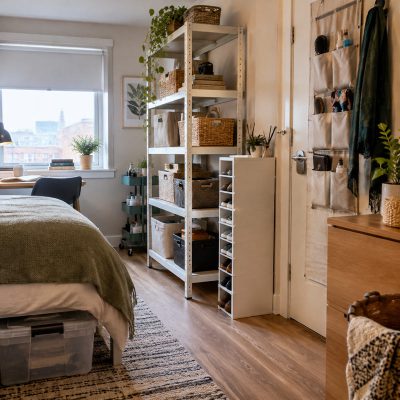
If you rent in the UK, you may know the frustration of trying to fit everything into a home that never seems to have enough storage. The bedroom wardrobe is too small, the kitchen cupboards are already full, and there is barely enough room for another piece of furniture. In older properties and smaller flats, storage can feel like an afterthought.
Putting up shelves or adding wall hooks might seem like the obvious answer, but tenants cannot always make permanent changes. Your tenancy agreement may restrict drilling, your landlord might require permission, and the last thing you want is to lose part of your deposit over a few holes in the wall.
Fortunately, you can add storage without drilling into walls. Freestanding furniture, tension systems, removable organisers and modular shelving can all help you make better use of the space you have. Combine these with a few practical changes to your daily routine, and even a small rental can become considerably easier to live in.
Start With the Space You Already Have
Before buying anything, take a fresh look at your home. There may be useful space beneath the bed, above existing furniture, inside cupboards or in corners that currently serve little purpose.
Think about a typical bedroom. Spare bedding might be taking up half a wardrobe, shoes may be scattered across the floor, and bags could be occupying the only available chair. Moving bedding into under-bed containers, using a narrow shoe rack and giving bags a designated place can free up space without adding much furniture.
It also helps to separate your belongings by how often you use them. Everyday essentials should be easy to reach, while seasonal clothing, spare towels and occasional-use items can go into less accessible storage.
This is worth doing before shopping because the problem is not always a shortage of storage. Sometimes, existing space simply is not being used very efficiently.
Freestanding Shelving for Awkward Spaces
Freestanding shelving is one of the easiest ways to increase storage in a rented home. It requires no permanent wall fixings in many cases, can be moved when you rearrange a room, and comes in sizes suitable for everything from narrow hallways to utility rooms.
Look Up, Not Just Out
When floor space is limited, a tall, narrow shelving unit can be more useful than a wide cabinet. It may fit beside a wardrobe, into an unused corner or alongside a kitchen appliance without taking over the room.
In the kitchen, shelving can hold tins, jars and small appliances. In a bathroom, it can keep spare toiletries and folded towels organised. A compact hallway unit can provide a home for shoes, bags and everyday essentials.
Measure the available space before choosing a unit, allowing for skirting boards, doors and nearby sockets. A shelf that fits neatly on paper may be awkward to use if it blocks a cupboard door or narrows a walkway.
Choose Shelving for the Job
The material and construction matter just as much as the dimensions. Lightweight shelving may be suitable for toiletries or folded clothes, while heavier household supplies need a sturdy frame and shelves with an appropriate load capacity.
Metal shelving is practical in kitchens and utility areas, whereas wooden or laminated designs may suit bedrooms and living rooms better. Storage baskets can keep smaller belongings together and make open shelves look less cluttered.
Assembly usually requires only basic tools, such as a screwdriver or Allen key, although the exact requirements depend on the design. A spirit level can also help you check that the unit stands evenly.
One safety point is easy to overlook: freestanding furniture is not automatically tip-proof. Follow the manufacturer’s instructions, keep heavier items on lower shelves and check whether the unit requires an anti-tip wall fixing. If it does, ask your landlord about an approved way to secure it rather than ignoring the requirement.
Tension Systems for Vertical Storage
Tension-based storage uses adjustable poles or frames held in place by pressure between two surfaces. Depending on the design, these systems can create extra hanging space or support lightweight shelves without conventional screws and wall plugs.
A tension shower caddy is a familiar example. Fitted according to the manufacturer’s instructions, it can provide several levels for shampoo, shower gel and other toiletries without drilling into bathroom tiles.
Similar systems may work inside wardrobes or cupboards, where an adjustable rail or organiser can make better use of unused vertical space. They are particularly useful when there is little room for another cabinet.
However, tension systems depend on the surfaces they press against. Uneven ceilings, weak surfaces and slippery finishes can affect stability, so check the product’s height range, permitted load and installation requirements before use. Moisture can also be a concern in bathrooms.
These systems are best suited to products designed for the specific space and load. They should not be treated as a substitute for secure fixings where heavy items or a risk of falling are involved.
Removable Storage Without Permanent Fixings
Sometimes, the problem is not a lack of cupboards but a lack of convenient places for everyday essentials. Keys end up on the kitchen counter, cleaning cloths are stuffed into a drawer, and toiletries crowd the bathroom sink.
Removable organisers can help keep these smaller items under control without adding bulky furniture.
Adhesive Hooks and Over-Door Organisers
Removable adhesive hooks are useful for lightweight items such as keys, tea towels, oven gloves and accessories. In a hallway, they can stop coats and bags piling up on chairs. Inside a cupboard, suitable hooks can hold cleaning cloths or lightweight utensils.
Over-door organisers are another option, particularly in bedrooms, bathrooms and utility areas. Depending on their design, they can store shoes, scarves, toiletries or cleaning products while leaving the floor clear.
Check the recommended surface and weight limit before installing adhesive products. Wallpaper, textured paint and damp surfaces may not provide a reliable bond, and some adhesives can damage paint when removed. Follow the manufacturer’s instructions and check with your landlord if you are unsure whether a particular fitting is permitted.
Make Use of Cupboard Doors
The inside of a cupboard door can be valuable storage space. Slim racks may hold foil, food bags, toiletries or cleaning supplies, provided the door can still close properly.
Before buying an organiser, check the door thickness and the clearance between the door and its frame. A poorly fitting rack can make the door difficult to close or leave marks over time.
Keep these organisers for lightweight items. Heavy bottles, pans and bulky supplies are better stored on suitable shelves or in a sturdy freestanding unit.
Modular Shelving That Moves With You
Modular shelving is a good option if you want storage that can adapt to different rooms or future moves. Rather than being limited to one fixed layout, many systems allow you to combine compatible cubes, shelves and storage boxes to suit the available space.
Adapt Storage to Different Rooms
Cube storage can hold books, folded clothing, toys and hobby supplies. Add baskets to keep smaller items out of sight, or leave some compartments open for things you use regularly.
In a home office, a modular unit can organise paperwork and printer supplies without taking over the desk. In a bedroom, a low unit may fit beneath a window, while a combination of open and closed compartments can provide living-room storage without making the space feel too crowded.
The benefit is flexibility. A unit used for books today might become a shoe organiser or utility-room shelf in another property.
Check Whether It Can Be Reconfigured
Not all modular furniture is equally adaptable. Some units can be rearranged in several ways, while others only work in their original configuration. Check the dimensions of individual components and whether additional sections are available if you expect your storage needs to change.
Remember that modular furniture can still require wall anchoring, particularly when tall units are stacked. Follow the manufacturer’s safety instructions and discuss any required fixings with your landlord before installation.
Keep Storage Rental-Friendly
The safest approach is to check your tenancy agreement before making changes to walls, doors or fitted furniture. Some landlords allow small alterations with permission, while others place tighter restrictions on drilling and adhesive fittings.
If you want to install anything that could damage a surface, ask your landlord or letting agent in writing first. This is especially worthwhile for heavy shelving or tall furniture that requires an anti-tip fixing.
For a less complicated option, start with storage that can be removed without altering the property:
- Freestanding shelves and bookcases that meet the manufacturer’s safety requirements.
- Under-bed boxes for spare bedding, clothes and shoes.
- Drawer units that fit beneath a desk or inside a wardrobe.
- Over-door organisers designed for your door’s thickness.
- Stackable containers and compatible modular storage.
- Removable hooks used within their stated weight limits and surface guidelines.
These options are generally easier to take with you when you move, although no product is guaranteed to leave every surface untouched. If your landlord has specific requirements, follow those rather than relying solely on a product’s damage-free claims.
Everyday Tricks to Make a Small Home Work Better
The right storage furniture helps, but a few small habits can make just as much difference.
Put Things Where You Use Them
Keep cooking utensils near the hob, cleaning supplies close to the areas you clean, and everyday bags and shoes near the entrance. When items are stored too far from where they are needed, they often end up on the nearest convenient surface instead.
A dedicated basket by the front door, for example, can keep keys, dog leads and other everyday essentials together. It is a simple arrangement, but it makes leaving the house less chaotic.
Use the Space Beneath Furniture
Under-bed containers are useful for seasonal clothes, spare bedding and shoes. Measure the clearance before buying them, and choose lidded boxes or suitable fabric bags to protect the contents from dust.
The space beneath a desk can also accommodate a small drawer unit or basket for paperwork and accessories. Just leave enough room to move your chair and access sockets or cables.
Make Cupboards More Efficient
A deep cupboard with only one shelf may have plenty of unused vertical space. Shelf inserts, stackable baskets and small containers can create separate levels for different items.
In the kitchen, an insert might give you room for mugs above plates. In a bathroom cupboard, containers can separate toiletries from spare soap and cleaning supplies. Clear boxes are useful when you want to see what’s inside without opening everything.
Start with the cupboard that causes the most frustration rather than trying to reorganise the whole home at once. A system that is easy to maintain is more useful than one that looks tidy for a day and quickly falls apart.
Store Seasonal Items Elsewhere
Thick winter bedding, out-of-season clothing and holiday decorations do not need to occupy prime storage space all year. Keep them in under-bed boxes or on suitable higher shelves, leaving the easiest-to-reach areas for everyday belongings.
Vacuum storage bags can reduce the bulk of suitable clothing and bedding, although you should check the care instructions before compressing delicate items. Make sure everything is clean and completely dry before storing it.
Give Small Items a Home
Charging cables, remote controls, pet toys and miscellaneous accessories can create clutter even when a room has enough furniture. A few baskets or small boxes can keep these items together without requiring another cabinet.
The aim is not to hide everything away. It is to make tidying up quick and convenient enough to become part of your normal routine.
Just avoid filling every spare corner with another storage unit. Clear floors, accessible drawers and comfortable walkways are important too, particularly in a small flat.
Make Your Rental Feel More Spacious
Adding storage to a rented home does not have to mean drilling into walls or investing in fitted furniture. Freestanding shelves, tension organisers and removable storage can help you make better use of awkward corners, cupboard space and areas beneath furniture.
The best approach is to choose solutions that fit your home and everyday routine, while checking your tenancy requirements before installing anything that might damage the property.
For pet owners, keeping toys, grooming supplies and leads neatly organised can make a small home easier to manage, too. Home Pet Essentials offers a range of pet and home products to help with everyday life around the house.