

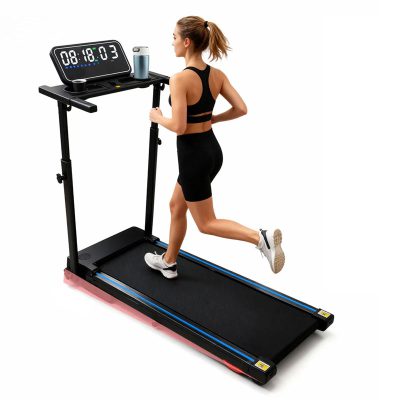
Over the past few years, home fitness has become a normal part of life for many people across the UK. Whether it is because gym memberships have become more expensive, working from home is now common, or simply because people want an easier way to stay active, treadmills have found their way into thousands of British homes. For example, a typical family living in a terraced house might decide to buy a treadmill because the local gym is no longer affordable and they want an easy way to keep up with daily exercise around busy work schedules. Having the option to walk or run at home lets them fit fitness into their routine without worrying about weather or childcare.
Yet many buyers make the same mistake. They focus on the biggest motor, the highest speed, or the longest list of technical specifications. After a few months, they realise the machine takes up too much space, makes too much noise, or simply does not suit how they actually exercise.
The truth is that choosing a treadmill for a typical British household is very different from choosing one for a commercial gym. Most homes have limited spare room, neighbours live close by, and the average user is looking to walk regularly, improve fitness, or lose a little weight rather than train for a marathon.
After years of using home treadmills and speaking with other fitness enthusiasts, I have found that five factors matter far more than flashy marketing claims. If you focus on these areas first, you are much more likely to end up with a treadmill that genuinely fits your lifestyle.
Size Comes First in Most UK Homes
When people begin comparing treadmills, they often jump straight to speed and power. In reality, the first question should be much simpler:
Where will the treadmill actually live?
This is especially important in Britain, where many homes are smaller than those found in North America. Flats, terraced houses, and semi-detached properties often have limited spare space.
A treadmill may look compact in product photos, but the reality can be very different once it arrives. To avoid disappointment, always measure the exact space where you want the treadmill to go before buying. Compare your measurements to both the folded and unfolded dimensions listed in the product details, making sure to allow for extra space to move around the machine. Taking a few minutes to check these numbers can save a lot of hassle and ensure your new treadmill will actually fit into your home comfortably.
Check Both Working and Folded Dimensions
Many manufacturers advertise folded dimensions, but you should also pay attention to the size when the treadmill is fully open.
Consider:
- The length required for walking or running comfortably
- Available floor space around the machine
- Ceiling height if the treadmill will be placed upstairs
- Whether doors can still open freely
A treadmill that fits perfectly on paper may still make a room feel crowded in daily use.
Foldable Models Are Often the Best Choice
For many households, foldable treadmills offer the best balance between usability and convenience.
Modern folding designs can often be stored:
- Beside a sofa
- Against a wall
- Under a bed
- Inside a spare room cupboard
Some walking pads are even slim enough to slide underneath furniture after every workout.
If your treadmill needs to remain permanently in the middle of a room, there is a good chance it will eventually become an expensive clothes rack.
Think About Daily Convenience
Ask yourself how often you are willing to move the machine.
A treadmill that takes thirty seconds to unfold and start using will get used far more often than one that requires a major furniture rearrangement every time.
For most families, convenience directly affects consistency.
Noise Matters More Than Most Buyers Expect
One of the biggest surprises for first-time treadmill owners is how far noise can travel.
Many British homes share walls with neighbours or have bedrooms directly above living spaces. Even if the treadmill itself is not particularly loud, vibrations can travel through floors and walls.
Understanding Decibel Ratings
Most treadmills provide a noise rating, often measured in decibels.
However, numbers alone are difficult to visualise.
Here are some everyday comparisons:
| Noise Level | Comparable Sound |
| 30 dB | Quiet bedroom at night |
| 40 dB | Library environment |
| 45 dB | Gentle rainfall or a quiet conversation |
| 50 dB | Typical refrigerator hum |
| 60 dB | Normal conversation |
If a treadmill is advertised around 45 dB, it is generally considered relatively quiet.
That does not mean it is silent. It simply means the motor itself is unlikely to be disruptive.
Foot Impact Is Often Louder Than the Motor
Many buyers focus entirely on motor noise.
In reality, the sound of footsteps hitting the running deck is often more noticeable.
This becomes particularly important when:
- Exercising early in the morning
- Living in an upstairs flat
- Sharing a house with children
- Having neighbours below
Ways to Reduce Treadmill Noise
A few simple adjustments can make a major difference:
Use a Treadmill Mat
A quality mat absorbs vibration before it reaches the floor.
Place the Machine on Solid Flooring
Carpet can sometimes amplify movement, while stable flooring often reduces unwanted vibration.
Maintain the Belt Properly
A dry or poorly adjusted belt frequently creates squeaks and friction noise that can easily be avoided.
For many UK households, a slightly quieter treadmill is worth far more than an extra few kilometres per hour of top speed.
Motor Power Should Match Your Real Needs
Motor specifications are often one of the most misunderstood aspects of treadmill shopping.
Many buyers assume that a larger motor automatically means a better treadmill.
That is not necessarily true.
Bigger Is Not Always Better
Manufacturers often promote larger horsepower figures because they look impressive.
However, motor power should match how the treadmill will actually be used.
For example:
- Walking users typically need far less power
- Light jogging requires moderate power
- Frequent running demands more consistent performance
Buying a professional-level motor when you mainly walk a few miles each day is similar to buying a race car for school runs.
What Most Home Users Actually Need
For typical home use, a motor in the lower to mid-range is usually sufficient.
The key factor is smooth and stable operation rather than the biggest number on the specification sheet.
Many households use their treadmill for:
- Daily walking
- Weight management
- Step goals
- Moderate cardio sessions
These activities rarely require the type of motor found in commercial gym equipment.
Professional-Level Motors Are Often Unnecessary
Once you move beyond approximately 3.0 CHP, you are entering territory designed for intensive running and frequent high-speed use.
These machines often:
- Cost significantly more
- Weigh considerably more
- Take up additional space
For most British households, that extra capability simply goes unused.
A reliable motor that performs consistently for years is far more valuable than excess power you never need.
Maximum Speed Is Usually Overrated
Speed is one of the easiest specifications to market.
A treadmill capable of 20 km/h sounds impressive.
The question is whether anyone in the household will ever use it.
Put Speed Into Real-Life Context
Most people walk at approximately:
- 4 to 5 km/h during a normal stroll
- 5 to 6 km/h during brisk walking
Fast power walking generally falls around:
- 6 to 8 km/h
This means many users can achieve excellent cardiovascular exercise without ever exceeding 8 km/h.
More Speed Does Not Automatically Mean Better Fitness
There is a common belief that faster equals healthier.
In reality, consistency matters much more.
Walking for forty minutes every day often provides greater long-term health benefits than occasional sprint sessions.
For many users, especially beginners, a moderate speed range is perfectly adequate.
Higher Speeds Can Increase Injury Risk
As speed increases, so does the stress placed on:
- Knees
- Ankles
- Hips
- Lower back
Without proper conditioning, chasing maximum speed can lead to discomfort or injury.
Many treadmill owners eventually discover that they spend most of their time well below the machine’s advertised maximum.
That is why paying extra solely for a higher top speed rarely makes sense.
Stability and Weight Capacity Are Essential for Safety
Among all treadmill specifications, stability may be the most overlooked.
A treadmill can have an excellent motor and impressive speed, but if it feels unstable underfoot, the user experience suffers immediately.
Consider the Heaviest User
Always choose a treadmill that comfortably exceeds the weight of the heaviest person who will use it.
Operating near the maximum limit places greater strain on:
- The motor
- The frame
- The running deck
A larger safety margin generally results in better durability.
Check the Frame Construction
A sturdy steel frame usually provides greater confidence during use.
When testing a treadmill, pay attention to whether it:
- Rocks from side to side
- Shifts during movement
- Feels unstable at higher speeds
Even small amounts of movement can become distracting over time.
Stability Improves Comfort
A stable treadmill not only improves safety but also feels more enjoyable to use.
Users tend to walk or run more naturally when they trust the machine beneath them.
That confidence often leads to longer and more consistent workouts.
Looking Beyond the Specification Sheet
One of the biggest lessons I have learned is that the best treadmill is rarely the one with the most impressive specifications.
Instead, it is the one that fits naturally into your home and daily routine.
A compact treadmill that folds away neatly, runs quietly, offers smooth performance, provides sensible speeds, and feels stable underfoot will often deliver a better experience than a much larger machine packed with features you never use.
Before buying, think carefully about where the treadmill will sit, who will use it, and how often it will realistically be switched on.
That practical approach usually leads to a purchase that continues delivering value long after the excitement of unboxing has faded.
For households looking to create a healthier home environment, combining a quality treadmill with other practical home essentials can make everyday wellness much easier. Brands such as Home Pet Essentials continue to focus on products designed to improve comfort, organisation, and daily living, helping families make better use of the spaces they already have.