

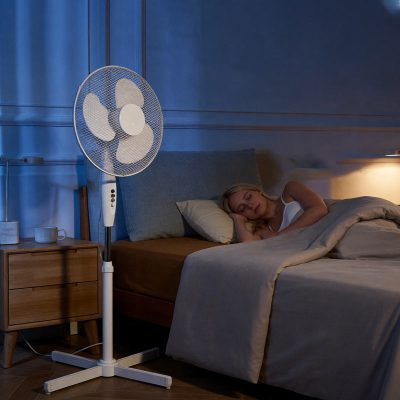
When a heatwave hits the UK, many people do the same thing almost on instinct. They switch on a fan, point it at the bed or sofa, and hope for the best.
Sometimes it helps.
Sometimes it just feels like warm air being pushed around the room.
And that’s where the frustration starts.
Especially in Britain, where many homes were built to keep heat in rather than let it out, summer overheating has become a bigger issue than people used to expect. Victorian terraces, loft bedrooms, newer insulated homes, top-floor flats — they can all turn into little ovens during hot weather.
Add in the fact that most UK households don’t have air conditioning, and electricity bills remain something people keep a close eye on, and it makes sense that more people want practical ways to cool a room with a fan without spending a fortune.
Here’s the good news.
A fan can do far more than most people realise.
Used the right way, it can help remove trapped heat, improve airflow, pull in cooler night air, support evaporative cooling and make a room feel significantly more comfortable.
The trick is not simply owning a fan.
It’s knowing how to use one properly.
First, Understand What a Fan Actually Does
A fan doesn’t lower the room temperature in the same way an air conditioner does.
That surprises some people.
What a fan does is move air.
And moving air helps in several ways:
- It speeds up sweat evaporation from your skin
- It creates a wind-chill effect
- It improves ventilation
- It can push hot air out or draw cooler air in
- It can reduce heat buildup in stagnant rooms
That means the goal isn’t just to blast air directly at yourself.
The goal is to manage airflow.
Once you think of a fan as a cooling tool rather than just a breeze machine, everything changes.
Use Your Fan to Pull Cool Air Into the Room
This is one of the most effective tricks for UK homes and is still surprisingly overlooked.
In the evening or early morning, outdoor air is often cooler than indoor air.
Use that.
Place a fan near an open window facing into the room to pull in cooler air.
This works especially well:
- In upstairs bedrooms at night
- In terraced houses with front-to-back airflow
- In flats with windows on opposite sides
- During cooler early mornings
Even better, create cross ventilation.
Open a second window elsewhere in the house and let air move through.
That creates a mini wind tunnel effect.
And honestly, it can make a huge difference.
A lot of people in Britain open one window and stop there.
Big missed opportunity.
Air movement through a home often matters more than one powerful fan.
During Peak Heat, Reverse the Strategy
Here’s a smart trick many people never try.
When outside air is hotter than indoors during the hottest part of the afternoon, don’t pull hot air in.
Push hot indoor air out.
Set a fan facing outward toward an open window.
Now you’re exhausting warm air instead of circulating it.
This works particularly well in upper-storey rooms where heat collects.
Hot air rises.
Loft bedrooms know this all too well.
Use that to your advantage.
Vent the heat out.
Simple, but surprisingly effective.
The Ice Bowl Trick Actually Works
Some hacks online are nonsense.
This one isn’t.
Place a bowl of ice or frozen water bottles in front of a fan.
The airflow passes over the cold surface and can create a cooler-feeling breeze.
Is it full air conditioning?
No.
Is it useful during a hot night?
Absolutely.
Especially in smaller bedrooms.
And compared with portable air conditioners that can cost a lot to run, it’s incredibly cheap.
Given how energy-conscious many UK households are right now, that matters.
Sometimes low-tech wins.
Use Fans at Night, Not Just During the Day
A lot of people focus only on daytime heat.
But nighttime overheating is often the bigger problem.
Poor sleep during hot weather is brutal.
And this is where fans shine.
Once outside temperatures drop:
Open windows.
Run a fan to bring in cooler night air.
Flush out the heat trapped in walls and furnishings.
This is particularly useful in British brick homes, which hold warmth long after sunset.
Think of it as resetting the room overnight.
Done well, the next day starts much cooler.
That can make a massive difference during multi-day heatwaves.
Close Curtains Before Rooms Overheat
This sounds unrelated to fans.
It isn’t.
Fans work better when they aren’t fighting solar heat gain.
South-facing windows can pour heat into a room.
Especially in conservatories or modern homes with big glazing.
Close blinds or curtains before direct sunlight floods in.
Reflective blinds help even more.
Then use the fan to circulate cooler, shaded air.
Prevention beats trying to remove excess heat later.
Always.
Put Your Fan in the Right Place
Placement matters far more than many people think.
People often put a fan wherever there’s floor space.
Bad move.
Position affects performance.
Some practical ideas:
Near windows
Best for pulling air in or exhausting heat out.
In doorways
Great for moving cooler air from one room to another.
At floor level
Cooler air often sits lower.
Useful in bedrooms.
Pointed past you, not directly at you
Sounds odd, but sometimes indirect airflow cools a room more evenly.
Experiment.
Small adjustments can change everything.
Ceiling Fans Can Save More Than You Think
If you have a ceiling fan, use the summer setting.
A lot of people never even realise this exists.
In summer, blades should spin counterclockwise.
That pushes air downward and creates a cooling effect.
And ceiling fans are cheap to run.
Very cheap compared with air conditioning.
For households watching electricity costs, they can be one of the best-value cooling options around.
Use Two Fans for a DIY Cooling System
One fan is helpful.
Two can be surprisingly effective.
Use one to bring cooler air in.
Use another to push warm air out.
Now you’re managing airflow properly.
This can work brilliantly in older UK homes with through-hall layouts.
It almost mimics mechanical ventilation.
Without the price tag.
Honestly, it feels a bit like cheating.
Turn Off Hidden Heat Sources
This gets overlooked constantly.
Your room may not just be hot because of the weather.
It may be generating heat.
Laptops.
TVs.
Game consoles.
Halogen lamps.
Cooking.
Even chargers.
They all add warmth.
During hot spells, reduce internal heat sources.
Then your fan has less work to do.
Cooling gets easier.
Use a Fan to Cool Yourself Smarter
Sometimes cooling the room fully isn’t realistic.
So cool, the person.
That sounds obvious, but strategy matters.
Use a fan while:
- Wearing light cotton clothing
- Using a damp cloth on pulse points
- After a cool shower
- With breathable bedding
- With lighter duvets in summer
Layering these methods works far better than relying on a fan alone.
Stack small wins.
They add up.
For Bedrooms, Oscillating Fans Often Work Better
For sleeping, many people assume stronger is better.
Not always.
Oscillating fans often outperform static airflow because they circulate air more naturally.
You avoid one spot blasting cold air at your face.
And the whole room feels fresher.
Tower fans can also work well in smaller UK bedrooms where floor space is limited.
Especially in city flats.
Quiet operation matters too.
A noisy fan can ruin sleep.
Worth thinking about.
Common Fan Mistakes That Make Rooms Feel Hotter
Let’s talk about what not to do.
These are common.
Running a fan in a sealed room all day
If hot air isn’t moving out, you may just circulate warmth.
Leaving windows open during peak afternoon heat
Sometimes you’re letting an oven in.
Pointing a fan at sun-heated walls
You may push warm air around.
Ignoring nighttime cooling opportunities
Huge missed opportunity.
Buying a fan only based on size
Airflow design matters more.
Bigger isn’t always better.
Smarter often beats bigger.
Why Fans Make So Much Sense in the UK
This is where fan cooling really fits British households.
Most homes don’t have air conditioning.
Portable air conditioners can be expensive to buy and costly to run.
And heatwaves in the UK often come in bursts, not for months on end.
That makes energy-efficient fan cooling practical.
Flexible.
Affordable.
And honestly, pretty effective when done right.
For many households, learning how to cool a room with a fan properly makes far more sense than chasing expensive cooling systems.
Especially when electricity prices remain front of mind.
Sometimes the Best Cooling Fix Is Combining Methods
This is probably the biggest takeaway.
Don’t rely on one trick.
Combine them.
Use shading.
Use airflow.
Use night ventilation.
Use two fans.
Use evaporative cooling.
Reduce heat sources.
Together they can transform a stuffy room.
That’s often how people get genuinely cooler homes without air conditioning.
Not one magic solution.
Better habits.
Choosing the Right Fan Matters Too
Not all fans perform the same.
And if you’re relying on fan cooling through summer, it’s worth choosing one designed for the job.
Good airflow.
Quiet operation.
Oscillation.
Energy efficiency.
Multiple speed settings.
Portable designs for moving room to room.
These things matter.
At Home Pet Essentials, you’ll find practical cooling solutions designed for real homes, including energy-efficient fans that suit bedrooms, living spaces and home offices. Whether you need a compact desk fan, a powerful tower fan or something pet-friendly for warmer days, there are options to make summer far more comfortable.
If you’re trying to stay cool without sending your energy bill through the roof, a well-chosen fan may be one of the smartest summer investments you make. And once you start using it strategically, not just switching it on and hoping for the best, you may be surprised how much cooler your home can feel.