

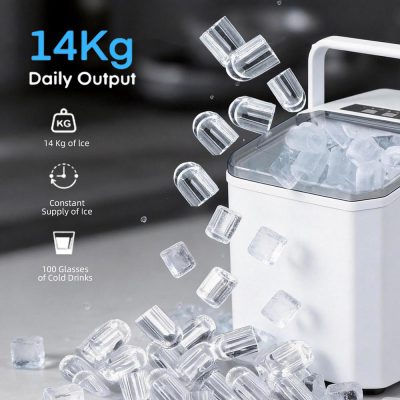
Countertop ice makers are still relatively niche in the UK, but they’re gradually becoming more popular among households looking for convenience.
Not long ago, most UK households relied on the humble ice tray tucked away in the freezer. It did the job—slowly. But as lifestyles shift toward convenience, home entertaining, and café-style drinks at home, more people are starting to look for faster, easier ways to keep the ice flowing.
So the real question isn’t just what these machines are—it’s whether they genuinely make sense in a UK home.
The Rise of Ice Makers in UK Homes
Let’s be honest: the UK isn’t exactly famous for an ice-heavy culture compared to, say, the US. But that’s changing.
A few reasons why:
- The rise of iced coffee and cold brew culture.
- More people are creating home bars and cocktail setups.
- Warmer summers.
- A growing focus on convenience and small appliances.
Add to that the boom in Airbnb hosting and garden gatherings, and suddenly, running out of ice becomes more than just a minor inconvenience.
What Exactly Is a Countertop Ice Maker?
A countertop ice maker is a compact appliance designed to produce ice quickly—usually in 6 to 15 minutes per batch—without needing a freezer.
Unlike traditional methods, it doesn’t require hours of waiting. You simply:
- Fill the reservoir with water.
- Turn the machine on.
- Wait a few minutes.
…and fresh ice starts dropping into the basket.
How Does It Work?
The process is surprisingly simple:
- Water is pumped into a chilled metal tray or evaporator.
- The machine rapidly cools it using a refrigeration cycle.
- Ice forms around small metal prongs.
- Once ready, the ice is released into a collection bin.
Then the cycle repeats.
→ The key advantage?
Speed and consistency—you’re not waiting hours, and you don’t run out mid-party.
Ice Usage in the UK: Do People Really Need It?
This is where things get interesting.
Traditionally, UK households didn’t use large amounts of ice daily. But modern habits are shifting:
1. Drinks Culture Has Changed
- Iced lattes and iced matcha are everywhere.
- Supermarket cold drinks are booming.
- More people are recreating café-style drinks at home.
2. Home Entertaining Is Growing
- Garden parties.
- BBQs.
- Weekend get-togethers.
And nothing kills the vibe faster than:
→ “Sorry, we’ve run out of ice.”
3. Lifestyle Upgrades
People are investing more in:
- Home bars.
- Outdoor kitchens.
- “Small luxuries” that improve everyday living.
→ So, while ice might not be essential for survival, it’s increasingly part of the modern UK lifestyle convenience.
When Does a Countertop Ice Maker Actually Make Sense?
Let’s get practical. Not everyone needs one—but in the right situations, it’s genuinely useful.
1. You Host Guests
If you’ve ever:
- Had people over.
- Run out of ice halfway through.
- Had to ration cubes like they’re gold.
Then yes, an ice maker is worth considering.
2. You Drink Iced Coffee or Cold Drinks Regularly
Buying bags of ice or constantly refilling trays gets old quickly.
A machine means:
- Ice on demand.
- No planning ahead.
- No freezer space taken up.
3. You Have Limited Freezer Space
UK kitchens tend to be compact.
A countertop unit:
- Frees up freezer space.
- Keeps things flexible.
4. You Run a Small Business or Airbnb
For:
- Coffee setups.
- Guest amenities.
- Small-scale hospitality.
It adds a professional touch with minimal effort.
5. You Value Convenience
At the end of the day, this is what it comes down to.
→ It’s not about needing ice—it’s about not wanting the hassle.
Are They Really Worth It?
Let’s be honest—no appliance is essential. But some genuinely make everyday life easier, and countertop ice makers fall firmly into that category for many UK households.
They’re Definitely Worth It If:
- You regularly enjoy cold drinks, iced coffee, or cocktails.
- You host friends or family, even occasionally.
- You value convenience and don’t want to plan for ice.
- You’re tired of slow, inconsistent freezer trays.
In these situations, an ice maker quickly goes from a “nice extra” to something you’ll use all the time.
When It Might Not Be a Priority:
- You rarely use ice.
- You’re perfectly happy sticking with traditional ice trays.
- Your kitchen space is extremely limited.
But realistically, for most modern households:
→ It’s not about necessity—it’s about convenience, and that’s where an ice maker really proves its value.
Once you have one, the ability to get fresh ice in minutes—without thinking ahead—feels less like a luxury and more like a smart upgrade to your daily routine.
What About Running Costs?
This is a big concern in the UK.
The good news:
- Most countertop ice makers are relatively energy-efficient.
- They only run when in use.
- Daily cost is generally low.
Compared to buying bags of ice regularly, they can actually be more cost-effective over time.
Everyday Benefits You Might Not Expect
Beyond the obvious, users often mention:
- Always having ice ready.
- Better drink experience.
- Less freezer clutter.
- A small but noticeable “lifestyle upgrade”.
FAQ: Common Questions About Ice Makers
1. How much do countertop ice makers cost in the UK?
Prices typically range from:
- £50–£120 (entry-level models).
- £120–£250 (mid-range, more reliable).
- £250+ (premium models with larger capacity or quieter operation).
→ For most households, a mid-range unit is more than enough.
2. How much ice can a home machine produce?
Most machines can produce:
- Around 10–15kg of ice per day.
- With a storage basket holding 1–2kg at a time.
That’s more than enough for:
- Daily use.
- Small gatherings.
- Weekend parties.
3. Do they need plumbing or installation?
No.
That’s one of the biggest advantages.
Just:
- Fill with water.
- Plug in.
- Start.
Final Thoughts
Countertop ice makers aren’t a necessity in the traditional UK sense—but they’re becoming increasingly relevant as lifestyles evolve.
They sit in that sweet spot between:
- Convenience.
- Comfort.
- Everyday luxury.
And for many households, once you have one, it’s surprisingly hard to go back.
If you’re looking to upgrade your home setup with practical, lifestyle-enhancing appliances, brands like Home Pet Essentials focus on exactly that—bringing small but meaningful improvements to everyday living in UK homes.