

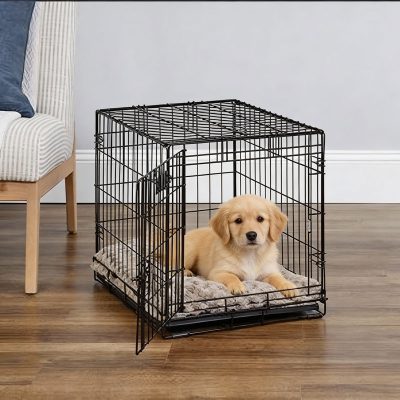
For many new dog owners, the idea of putting a dog in a crate can initially feel uncomfortable. It often raises questions like: Is it fair? Will my dog feel trapped? Am I doing the right thing? These are completely normal concerns. However, when used correctly, crate training is widely recommended by vets, trainers, and behaviour specialists across the UK.
In fact, many dogs naturally see their crate as a safe, calm retreat — somewhere they can relax, sleep, and escape household noise. The key is understanding how long a dog should stay in a crate and how to balance crate time with exercise, play, and companionship.
This guide explains safe crate timing, benefits, potential risks, and how needs vary between popular dog breeds in the UK. It’s important to note that mixed or less common breeds may have varying crate training needs as well. Consulting a vet or a trainer can provide tailored advice for these cases to ensure the best care for your pet.
Why Crates Can Be Beneficial for Dogs
When introduced positively, a dog crate becomes more than just containment. It supports training, safety, and emotional comfort.
1. Creates a Safe Personal Space
Dogs are den animals by nature. A properly sized crate gives them a quiet, enclosed area where they can rest without disruption. This is especially helpful in busy UK households or flats where visitors, children, or other pets may create stimulation.
Many dogs voluntarily choose their crate once they associate it with comfort and security.
2. Helps with Toilet Training
Crate training is one of the most effective ways to house-train puppies. Dogs instinctively avoid soiling their sleeping area. By using a crate and maintaining a regular outdoor toilet schedule, owners can establish reliable routines much faster.
3. Prevents Destructive Behaviour
Young dogs and certain high-energy breeds often chew furniture, shoes, or electrical cables when left unsupervised. A crate protects both the dog and the home while owners are working or temporarily unavailable.
4. Supports Travel and Vet Visits
Dogs that are comfortable with crates typically handle car travel, grooming appointments, and vet stays with less stress. This can be extremely valuable throughout a dog’s lifetime.
How Long Is Too Long? General Crate Time Guidelines
Crate time depends heavily on age, energy level, and training stage. Below are widely accepted guidelines used by UK trainers and welfare organisations.
Puppies
Puppies have limited bladder control and need frequent interaction.
- 8–10 weeks: Around 30–60 minutes during the day
- 10–16 weeks: Up to 2 hours
- 4–6 months: Around 3–4 hours maximum
At night, puppies can usually stay in a crate longer, but they may still need toilet breaks.
Adult Dogs
Most healthy adult dogs can stay in a crate for:
- 4–6 hours comfortably
- Occasionally, up to 8 hours if properly exercised and trained
However, regularly exceeding six hours during the day is generally discouraged unless balanced with significant exercise and interaction.
Senior Dogs
Older dogs often require more frequent toilet breaks and may develop joint stiffness. Many benefit from shorter crate sessions combined with comfortable bedding.
What Happens If a Dog Stays in a Crate Too Long?
Crates are helpful tools, but overuse can create physical and behavioural problems.
1. Physical Health Issues
Dogs that remain confined for extended periods may experience:
- Muscle stiffness
- Reduced circulation
- Bladder or urinary problems
- Increased risk of obesity due to reduced movement
This is particularly important for larger breeds that require regular exercise.
2. Anxiety and Behavioural Problems
Excessive crate time can lead to:
- Separation anxiety
- Barking or whining
- Destructive escape attempts
- Depression or withdrawal
Dogs thrive on social interaction. Long isolation can negatively affect emotional well-being.
Do Different Breeds Have Different Crate Time Needs?
Yes — breed temperament and energy levels make a significant difference. Below are examples of popular UK dog breeds and their typical crate tolerance.
Labrador Retriever
Labradors are among the UK’s most popular family dogs. They are energetic, sociable, and intelligent.
- Recommended crate time: 3–5 hours
- Labradors require daily exercise and mental stimulation. Without it, they can become restless and destructive.
French Bulldog
French Bulldogs are compact, affectionate companions often suited to flat living.
- Recommended crate time: 4–6 hours
- They generally tolerate crate time well but still require human interaction. Overheating can also be a concern, so good ventilation is essential.
Cocker Spaniel
Cocker Spaniels are playful and highly active working dogs.
- Recommended crate time: 3–4 hours
- These dogs thrive with regular walks, training games, and social time. Long confinement can increase anxiety or hyperactivity.
Border Collie
Border Collies are extremely intelligent and high-energy herding dogs.
- Recommended crate time: Shorter sessions, usually 2–3 hours
- They need extensive exercise and mental stimulation. Crates are best used for rest rather than long daytime confinement.
Dachshund
Dachshunds are smaller but often stubborn and independent.
- Recommended crate time: 4–6 hours
- They benefit from crate training during house training but still require regular movement to protect their spine and joints.
Balancing Crate Time with Free Time
The healthiest crate routine combines structure with freedom. Dogs should never view their crate as punishment or isolation.
Create a Predictable Routine
Dogs respond well to consistency. A typical UK weekday schedule might include:
- Morning walk and toilet break
- Breakfast followed by short crate rest
- Midday break or dog walker visit
- Afternoon crate rest
- Evening walk, play, and family time
- Overnight sleep in a crate
Ensure Adequate Exercise
Exercise requirements vary by breed but generally include:
- Daily walks
- Interactive play
- Training sessions or enrichment toys
A tired dog is far more likely to relax happily inside a crate.
Make the Crate Comfortable
A crate should feel welcoming rather than restrictive. Owners should include:
- Soft bedding
- Chew-safe toys
- Water access when appropriate
- Proper crate size allowing the dog to stand, turn, and lie down comfortably
Signs Your Dog Is Comfortable with Crate Use
Positive crate training usually results in dogs that:
- Enter the crate willingly
- Sleep or relax quietly inside
- Show no signs of distress when the door closes
If a dog persistently cries, scratches excessively, or refuses to enter, crate training methods may need adjusting.
Common Crate Training Mistakes
New owners often make simple errors that can affect crate success.
Using the Crate as Punishment
This creates negative associations and increases anxiety. The crate should always feel safe and positive.
Introducing the Crate Too Quickly
Dogs need gradual exposure. Start with short sessions and build duration slowly.
Choosing the Wrong Size Crate
A crate that is too large may encourage toileting inside. One that is too small restricts comfort and movement.
FAQ
Is it cruel to crate a dog while I am at work?
Not necessarily. Many UK dog owners crate their dogs during working hours. The key is ensuring the dog receives adequate exercise, toilet breaks, and attention outside crate time. Hiring a dog walker or returning home midday can greatly improve welfare.
Should dogs sleep in crates at night?
Many dogs sleep safely and comfortably in crates overnight, especially puppies and newly adopted dogs. As dogs mature and become trustworthy, some owners transition them to dog beds or free-roaming sleeping arrangements.
Choosing the Right Crate and Accessories
Selecting the right crate can make a major difference in training success and your dog’s comfort. Strong, well-ventilated dog crates with secure locking systems provide safety while allowing dogs to relax properly. Comfortable bedding, chew-resistant toys, and travel-friendly crate designs also support long-term crate use.
Home Pet Essentials offers a range of practical dog crates, bedding, and training accessories designed to suit various breeds, home layouts, and lifestyles. Whether you are crate training a young puppy or creating a calm resting space for an adult dog, choosing quality equipment helps ensure both safety and comfort.
Understanding how long a dog should stay in a crate is about balance rather than strict rules. When crate training is handled thoughtfully, it becomes a valuable tool that supports training, safety, and emotional well-being. By combining sensible crate timing with exercise, social interaction, and proper equipment, dog owners can create routines that help dogs feel secure, relaxed, and happy in their home environment.