

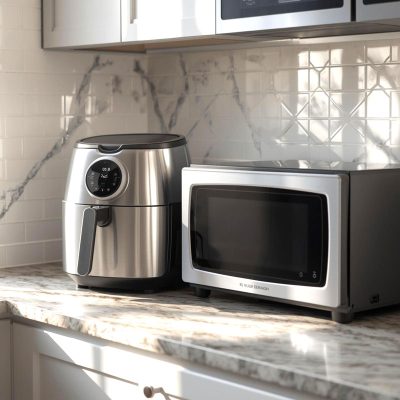
It’s a familiar scene in many kitchens. You’re hungry, short on time, and standing in front of two appliances that promise great food: the air fryer on the countertop and the traditional oven built into the wall. One feels modern and fast, the other reliable and versatile. But when it comes to daily cooking, which one should you use — and why?
As someone who cooks at home almost every day, I’ve learned that the debate between air fryers and home ovens isn’t about which one is “better.” It’s about understanding what each appliance does best, how they affect food differently, and how to use them intelligently to get the most flavour, texture, and nutrition from your meals.
Let’s break it down in a practical, cook-first way.
Understanding the Basics: How Air Fryers and Ovens Actually Work
How an Air Fryer Cooks Food
Despite the name, an air fryer doesn’t fry food in oil. It uses rapid hot air circulation combined with a compact cooking chamber to cook food quickly and evenly.
Key characteristics:
- Small enclosed space
- Powerful fan circulating hot air
- High heat is applied directly to the food surface
This setup allows food to cook faster while creating a crisp exterior with minimal oil.
How a Conventional Oven Cooks Food
A traditional home oven uses radiant heat, sometimes assisted by a fan (convection ovens), to cook food more gradually.
Key characteristics:
- Larger cooking space
- More stable, even heat over time
- Better for slow cooking and multi-dish meals
Ovens excel at consistency, volume, and versatility.
Key Differences at a Glance
| Aspect | Air Fryer | Home Oven |
| Cooking Speed | Very fast | Moderate to slow |
| Capacity | Small to medium | Large |
| Energy Use | Lower for small meals | Higher overall |
| Texture | Extra crispy | Even, balanced |
| Best For | Quick meals, snacks | Baking, roasting, large dishes |
Texture and Crispness: Where Air Fryers Shine
If there’s one area where air fryers truly stand out, it’s texture.
Air Fryer Results
- Crispy edges
- Dry, golden surfaces
- Great crunch with minimal oil
Foods like:
- French fries
- Chicken wings
- Breaded vegetables
- Frozen snacks
often come out better in an air fryer than in a conventional oven, especially when time is limited.
Oven Results
Ovens create a more balanced texture, especially for foods that need internal moisture.
They’re ideal for:
- Roasted meats
- Cakes and bread
- Lasagna and casseroles
- Whole vegetables
Instead of aggressive crisping, ovens provide gradual browning and even cooking throughout.
Nutrition: Does One Method Make Food Healthier?
Oil Usage
Air fryers typically require:
- 70–90% less oil than deep frying
- Slightly less oil than oven roasting
This can reduce overall fat and calorie intake, especially for traditionally fried foods.
Nutrient Retention
Both appliances preserve nutrients well, but differences appear depending on the food.
- Air fryers cook faster, which can help retain heat-sensitive nutrients in vegetables.
- Ovens are better for slow roasting, which enhances flavour but may slightly reduce some vitamins over long cooking times.
In practice, the nutritional difference is small. Ingredients and portion size matter far more than the appliance itself.
Colour and Appearance: Visual Differences on the Plate
Air-fried food tends to:
- Brown faster
- Develop darker edges
- Look more “fried”
Oven-cooked food usually:
- Browns more evenly
- Maintains natural colour gradients
- Looks more traditional and bakery-style
For presentation:
- Air fryers are great for crispy, casual meals
- Ovens win for plated dinners and baked goods
Capacity and Convenience: Real-Life Cooking Scenarios
When an Air Fryer Makes Sense
- Cooking for 1–2 people
- Reheating leftovers without sogginess
- Making quick lunches or snacks
- Avoiding preheating a full oven
The air fryer is incredibly efficient for small portions and busy schedules.
When an Oven Is the Better Choice
- Cooking for a family
- Preparing multiple dishes at once
- Baking bread or desserts
- Roasting large cuts of meat
Trying to cook a full family meal in an air fryer often means cooking in batches, which defeats the purpose.
Energy Efficiency: Which One Saves More Power?
For small meals, air fryers are usually more energy-efficient because:
- They heat up faster
- They cook food quickly
- They use less overall power per session
However, for large meals, ovens become more efficient by cooking everything at once rather than running an air fryer repeatedly.
How to Get the Best Results from Each Appliance
Smart Air Fryer Tips
- Don’t overcrowd the basket — airflow matters
- Shake or flip the food halfway through
- Lightly coat food with oil for better browning
- Lower oven recipes by 10–20°C when converting
Smart Oven Tips
- Preheat properly for baking
- Use convection mode when available
- Rotate trays for even browning
- Use the right cookware to control heat distribution
Knowing how to adjust recipes is more important than the appliance itself.
Can You Replace an Oven with an Air Fryer?
Short answer: No — and you shouldn’t try to.
An air fryer is a specialist. An oven is a generalist.
Many experienced home cooks use both:
- Air fryer for speed and crispness
- Oven for volume, baking, and consistency
Together, they cover nearly every cooking need.
Choosing the Right Tool for the Meal
Ask yourself:
- How much food am I cooking?
- Do I want crisp or tender?
- Am I cooking fast or slow?
- Is this a main dish or a side?
The answers naturally guide you toward the right appliance.
Kitchen Tools Matter More Than You Think
Air fryers and ovens each deliver their best results when used with a clear understanding of their strengths. Knowing when speed and crispness matter more — and when capacity and gentle, even heat are the priority — is what truly elevates everyday cooking.
For home cooks who rely on air fryers as part of their daily routine, choosing a well-designed, reliable appliance makes a noticeable difference. Home Pet Essentials focuses on offering thoughtfully selected air fryers built for practical home use, helping users achieve consistent results without unnecessary complexity.
A Cook’s Perspective
After years of home cooking, I’ve learned that great meals don’t come from choosing sides in the air fryer vs. oven debate. They come from understanding your tools, respecting the ingredients, and using the right method at the right time.
When used thoughtfully, both air fryers and conventional ovens can deliver delicious, satisfying meals — crispy when you want crunch, tender when you want comfort, and always tailored to how you actually cook at home.